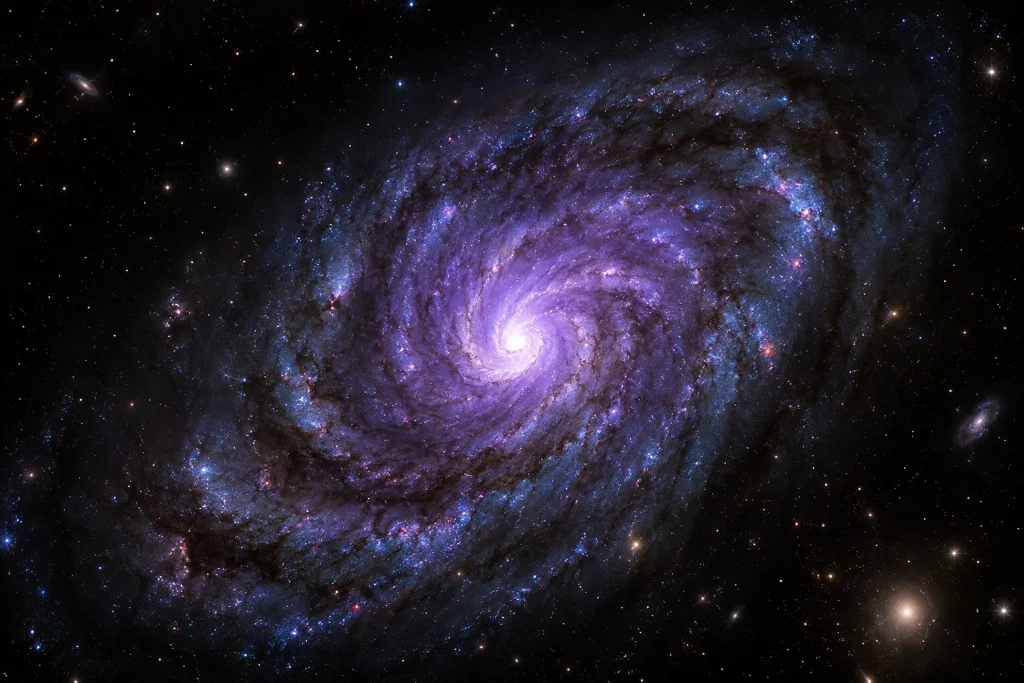
Scientists using NASA’s Chandra X-ray Observatory have discovered a new class of objects exhibiting previously unseen behavior. According to research published Wednesday in Nature Astronomy, these objects produce intense ultraviolet radiation while emitting exceptionally low-energy X-rays.
By examining data from the Chandra archive, researchers identified a total of 84 “hypersoft X-ray sources” in six galaxies. These sources were found in the spiral galaxies M31 (the Andromeda Galaxy) and M101 (the Pinwheel Galaxy), as well as in four elliptical galaxies. The objects were observed both in regions where star formation is ongoing and in areas containing old stars.
The sources were visible in the low-energy X-ray portions of Chandra images but disappeared in the high-energy portions. Because low-energy X-rays are close to energetic ultraviolet radiation in the electromagnetic spectrum, the team concluded that these objects also emit large amounts of ultraviolet radiation.
The nature of the objects is not yet known. Researchers think they could be binary systems containing a black hole, neutron star or white dwarf pulling matter from a companion star. The discovery could shed light on such previously undetected systems, as well as two cosmic mysteries: identifying white dwarf systems that evolve into Type Ia supernovae and understanding how interstellar gas in some galaxies loses its electrons.
Why it matters
The significance of the discovery lies in the fact that these sources cannot be associated solely with specific star-forming environments; their presence across different galaxy types and stellar populations broadens the field of research while making it more difficult to understand the conditions under which they form. Since the true nature of the objects remains uncertain, it is not yet possible to determine which type of system containing a black hole, neutron star or white dwarf produces the observed radiation. This distinction is important for studies searching for the progenitor systems of Type Ia supernovae, because the question of which observational features could identify candidate systems remains open. The findings also provide a new observational framework for investigating the extent to which these sources may contribute to the loss of electrons from interstellar gas in galaxies.
Background
NASA is not a new name in the FikirPilot archive: we have published 24 articles mentioning the name in the last 90 days; the most recent was dated September 8, 2026.