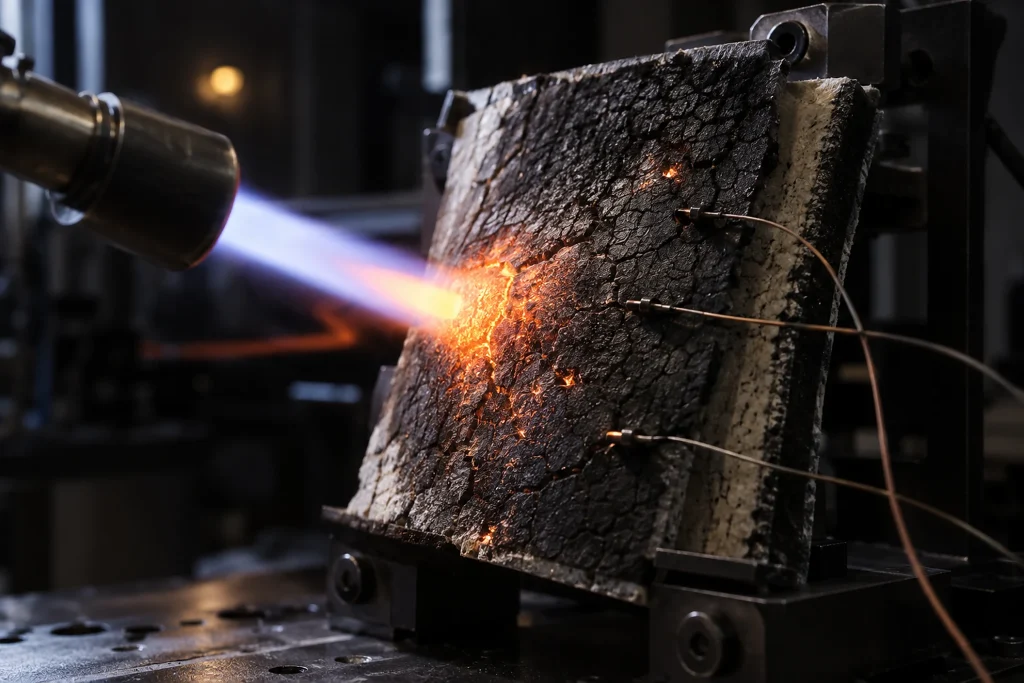
When the Orion capsule returned to Earth from the Artemis I Moon mission, it was found that large pieces had broken off the heat shield, posing a serious risk to future missions. [polymatt] prepared samples that replicated Orion’s segmented structure using materials published by NASA, then heated them with a propane torch while monitoring them with thermocouples.
The experimental results were consistent with NASA’s findings on the heat shield failure: Gas buildup caused by ongoing pyrolysis led the material to crack. Although the experiment had some flaws, such as the effect of residual heat from the copper structure, the setup offered a method that could be used to test ablative heat shields under laboratory conditions.
Why it matters
This study shows that the problem with the Orion heat shield can be investigated not only through post-flight observations but also with controlled laboratory setups. This points to a more accessible testing approach that could help NASA assess material behavior for future missions. However, the experiment does not encompass all real-flight conditions; flaws such as the effect of residual heat from the copper structure must be taken into account when interpreting the results. The open question, therefore, is whether the cracking mechanism observed in the laboratory would emerge in the same way and at the same scale in flight hardware. The findings are particularly relevant to those interested in heat shield design, testing methods, and safety assessments for subsequent missions in the Artemis program.
Background
NASA is not a new name in the FikirPilot archive: we have published 29 news reports mentioning the name in the last 90 days; the latest is dated September 12, 2026.