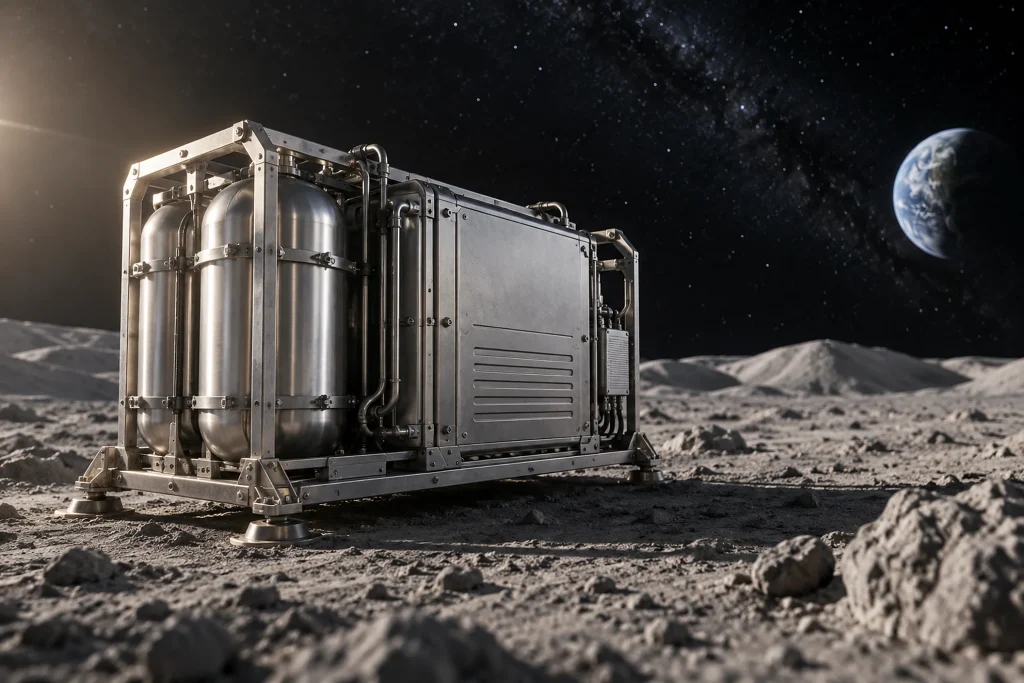
US-based Teledyne Energy Systems will work with NASA on a hydrogen fuel cell that will power lunar habitats and deep-space missions. Under a “Space Act Agreement,” the Hydrogen Electric Power System (HEPS) will be upgraded from Technology Readiness Level (TRL) 5 to 7 with the support of NASA’s Glenn and Johnson Research Centers; the system is intended to be demonstrated as a prototype in an operational environment suitable for space conditions. Independent of atmospheric air, HEPS will use hydrogen to provide electricity to spacecraft, habitats, and surface infrastructure. Barbara Stachowiak described the collaboration as a milestone for hydrogen fuel cells. The work will bridge the gap between the laboratory and flight-ready systems for uninterrupted energy during long-duration missions.
Why it matters
The importance of this collaboration lies in the effort to move the hydrogen fuel cell beyond laboratory-level technology to a prototype stage that can be tested under space conditions. Its lack of reliance on atmospheric air expands its potential applications in enclosed habitats and surface infrastructure, where conventional energy solutions may be limited. For this reason, the development is of particular interest to teams concerned with energy continuity and infrastructure design, especially on long-duration missions. However, what remains unclear is how HEPS will complete its prototype demonstration in the targeted operational environment and to what extent it will meet the need for uninterrupted power on long-duration missions. The main assessment will focus less on the increase in technical readiness than on the system’s feasibility under actual mission conditions.
Background
NASA is not a new name in the FikirPilot archive: we have published 32 news reports mentioning the name in the last 90 days; the most recent is dated September 26, 2026.