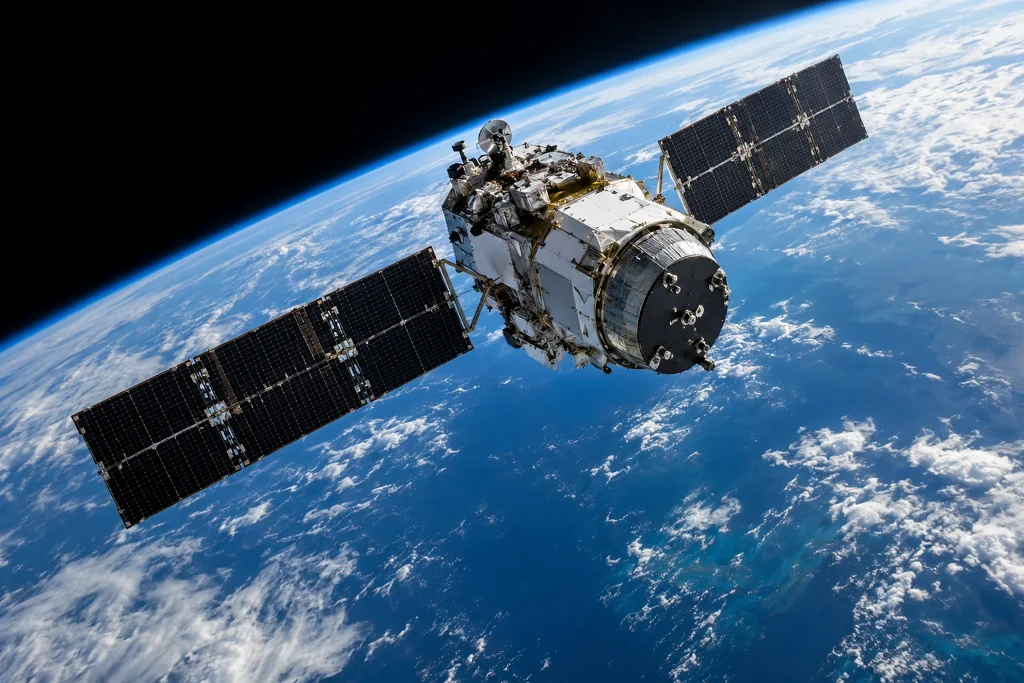
Satlyt, co-founded by Rama Afullo, who served as a product manager at Google and SpaceX, has raised $8 million in seed funding to develop software for running AI models on satellites. Based in Sunnyvale, California, and Nairobi, the company aims to build a software platform that can run on satellites operated by different companies rather than producing its own spacecraft. Afullo likens this approach to VMware and Snowflake, describing Satlyt as an open and horizontal ecosystem.
Satlyt has sent its software into space on two demonstration missions so far. The company’s initial goal is to make satellite operations more efficient and enable them to make decisions in space instead of at control centers on Earth. Since downloading data from satellites can be costly and slow, having AI resolve malfunctions or process sensor data in space can reduce costs.
This year, Satlyt used Google DeepMind’s Gemma model on a spacecraft operated by Momentus. The model reduced the size of transmissions related to software errors on the spacecraft by more than 60%. Afullo said this could save hundreds of thousands of dollars per satellite each year.
In this week’s SpaceX launch, Satlyt’s software will be used on a spacecraft developed by TakeMe2Space, an Indian startup that makes satellite computers. The mission has three customers:
- NASA will test cloud computing protocols in space.
- Stellerian will experiment with image processing for tracking objects in orbit.
- TakeMe2Space will demonstrate that its satellite can run software from other companies.
Next year, the company plans to attempt to build a shared cloud computing system connecting two different satellites. If successful, Satlyt could serve satellite manufacturers as a third-party computing provider.
The investment round led by Houston-based Non Sibi Ventures also benefited from Bernard Harris’s more than 20 years of experience as a NASA astronaut. Investors viewed Satlyt’s not being dependent on building large data centers in space as a major advantage. Afullo aims for Satlyt to be used on 20% of satellites by the end of the decade and for satellite manufacturers to standardize advanced processors.
Why it matters
The significance of this venture lies in its potential to ease the requirement that data collected from satellites be processed only at facilities on Earth; this would make communications capacity and operating costs in space missions directly linked to the capabilities of the software being used. The platform approach could steer satellite manufacturers toward a structure capable of running different computing tools without being tied to a single hardware-software configuration, and could expand the role of software providers in the space sector. NASA’s cloud computing experiment, along with image processing and interoperability tests, provides a framework in which this model will be tested against different mission requirements. However, it remains unclear how smoothly connecting two separate satellites through a shared cloud system would work in practice and to what extent manufacturers would adopt this software layer.
Background
Google is not a new name in the FikirPilot archive: we have published 73 news reports mentioning the name in the last 90 days; the most recent was dated October 2, 2026.
Term: cloud computing
Cloud computing is the use of resources such as servers and storage by renting them instead of using your own hardware.