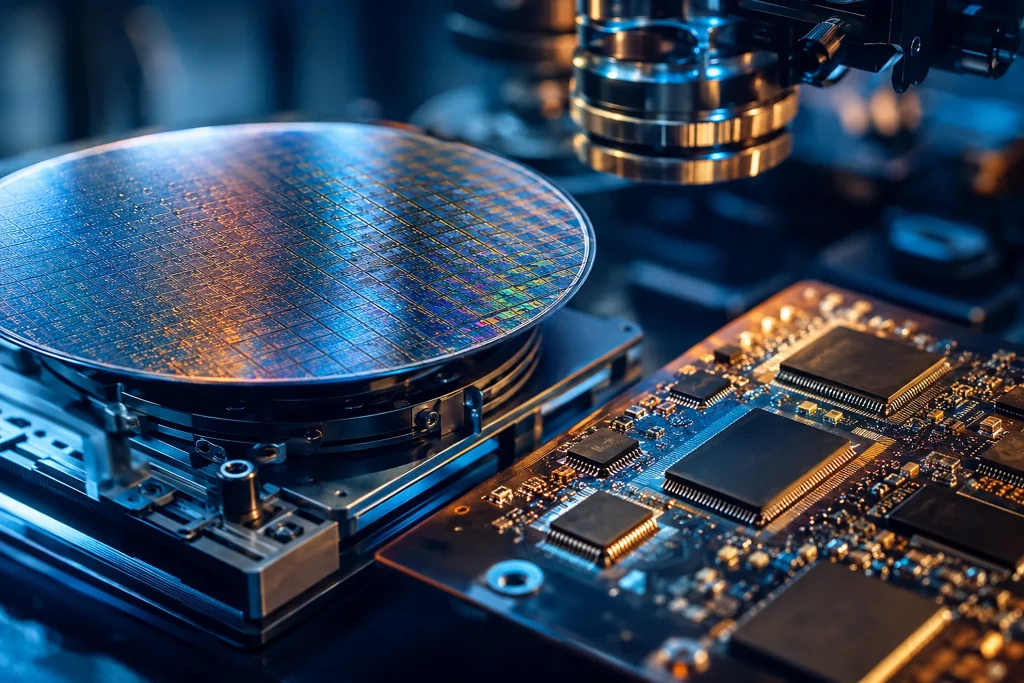
As new iPhones that Apple is expected to unveil this week face the prospect of price increases, the main reason behind the technology sector’s surge is memory costs. Although AI investments are driving up demand, the problem began before ChatGPT. Manufacturers had been increasing capacity by fitting more chips onto the same wafer through technological advances; however, as these gains slowed, new facilities became necessary. Excess inventory following the pandemic-era demand for electronics and weakening consumer spending, meanwhile, led to a slowdown in investment. Generative AI’s much greater-than-expected need for memory deepened the shortfall in the recovering market.
Approximately 90% of the memory market is controlled by three companies. According to Counterpoint, in the second quarter of 2026, Samsung held a 39% share, SK Hynix 26%, and Micron 25%. DRAM, used in smartphones and computers, handles temporary operations, while NAND stores long-term data such as photos and files. High-bandwidth memory (HBM), used in AI data centers, is a more advanced and profitable product. Micron says HBM requires approximately three times as many wafers as conventional DRAM to produce the same amount. Long-term purchase commitments from companies such as Nvidia, AMD, Meta, and Microsoft are prompting manufacturers to allocate capacity to AI products.
This preference also increased profitability. SK Hynix’s operating margin rose to 76% last quarter, Micron’s adjusted gross margin reached 85%, and Samsung’s chip profit increased approximately 250-fold year over year. Smartphone DRAM prices rose approximately 56% quarter over quarter in the first quarter of 2026 and approximately 83% in the second quarter. The cost of 16GB DRAM rose from approximately $42 in the second quarter of 2025 to approximately $181 one year later.
It takes years for new capacity to come online. Meaningful production at Micron’s New York facility is not expected before 2030, while wafer production at its Idaho factory is expected to begin in mid-2027. As the company raises capital spending to above $25 billion this year, Counterpoint and IDC expect supply to catch up with demand at the earliest by the end of 2027 or the beginning of 2028.
Cost pressures have led Microsoft to raise Xbox prices by $100 to $150 and Meta to increase the price of Quest 3 by $100. The starting price of Apple’s iPhone 18 Pro is estimated at $1,299, which is $200 more than the iPhone 17 Pro. The company plans to focus more heavily on the higher-priced Pro models. While price increases are expected to slow in the long term, prices are not expected to return to 2025 levels.
Why it matters
This table shows that the squeeze in memory production is putting not only data centers but also smartphone and computer buyers in competition for the same capacity. The fact that approximately 90% of the market is concentrated among three manufacturers means that production decisions and long-term purchasing commitments could directly affect the supply allocated to consumer electronics. HBM requiring more wafers and being more profitable is encouraging manufacturers to direct capacity toward high-return AI products. Therefore, the extent to which companies will pass costs on to consumers and how the shift toward more expensive models will affect demand remain open questions. Since it will take time for new facilities to begin production, supply relief is not expected before the end of 2027 or the beginning of 2028.