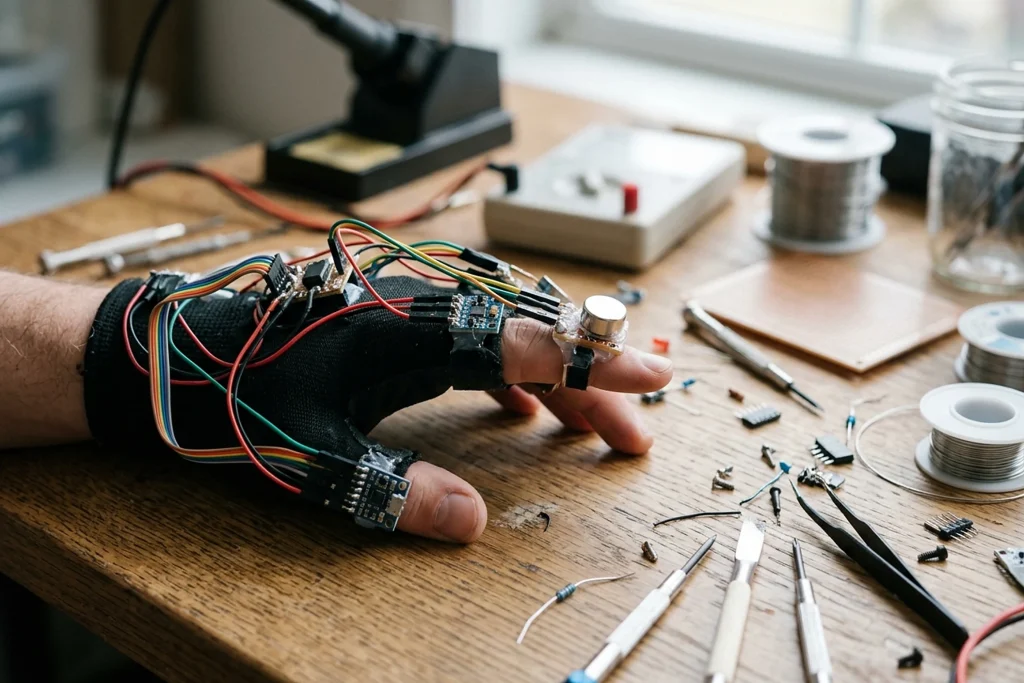
TAKTO offers open-source hand tracking that is built like LEGO. The challenge begins with the camera. Camera-based hand tracking systems used in virtual and augmented reality falter when fingers overlap or leave the camera’s view. Sebastian Molano aims to solve these problems with the open-source TAKTO glove he developed as a thesis project. The glove determines finger position using magnetic encoders instead of a camera, and actuators pull on the fingers to provide the user with additional feedback. Build details are published on GitHub. The TAKTO.one site provides project information. Also featured there are a console that visualizes the glove’s usage and status via a live digital twin of the device, as well as a visual assembly guide. The high-quality actuators used drive up the cost. The actuator-equipped version is therefore expensive. A sensing version that only performs hand tracking is also available. Valve’s publicly released work could also serve as a resource for those looking to add functionality to existing VR hardware.
Why it matters
Camera-based hand tracking faltering when fingers overlap or leave the field of view is a known bottleneck for developers who want seamless interaction in virtual and augmented reality; that is why an approach that does not depend on cameras matters to anyone seeking more reliable input. The project being open source, along with the publication of the assembly guide and the live digital twin console, lowers the barrier for makers and researchers who want to build and modify their own hardware without waiting for a commercial product. The fact that high-quality actuators providing haptic feedback drive up the cost makes visible the tension between realism and accessibility in this kind of hardware; the sensing version that only performs hand tracking is a practical response to that tension. Whether the work, still at the thesis project stage, will be adopted by the community and turn into a sustainable tool remains an open question. The fact that Valve’s publicly released work could serve as a resource for those looking to add functionality to existing VR hardware also makes the development relevant for users who do not want to build their own device.
Term: open source
Open source means that a software’s source code is available to everyone and that its license permits examination, modification, and redistribution; it is not the same as being free of charge.