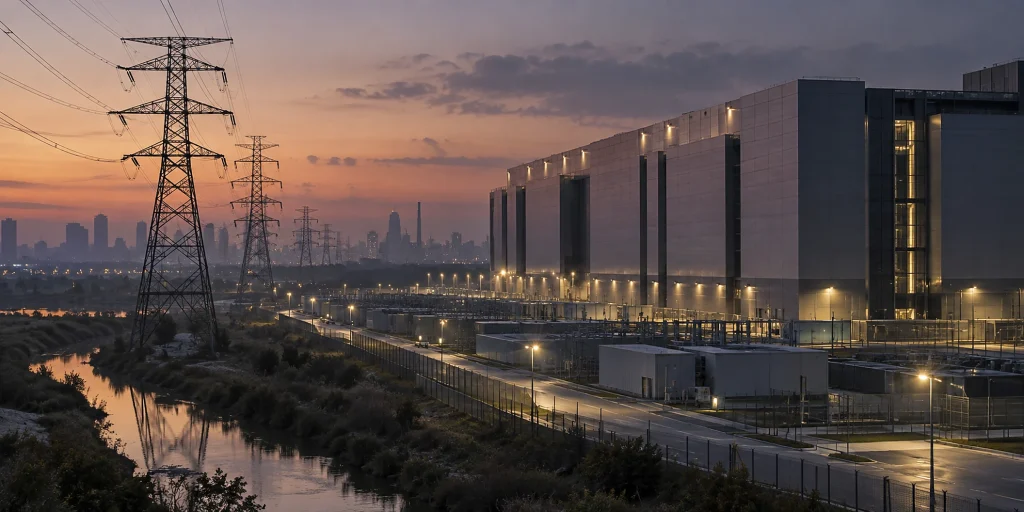
The rapid spread of artificial intelligence data centers in the US is fueling local opposition over energy use, environmental pollution, water consumption and promises of employment. In Philadelphia, the environmental justice organization Philly Thrive is calling for a temporary halt to data center construction in the city, even though no formal project has yet been proposed. City officials have identified Northeast Philadelphia and the Grays Ferry neighborhood in Southwest Philadelphia as two possible locations.
Shawmar Pitts, co-executive director of Philly Thrive, grew up in Grays Ferry near the facility that closed after an explosion in 2019 and was then the largest oil refinery on the East Coast. Pitts said that information shared by Philly Thrive in the neighborhood in 2018 helped him recognize a possible link between chronic illnesses in his community and the refinery. Sonya Sanders, chair of the organization’s board, also blamed refinery emissions for the illness of her husband, who died of a rare bone cancer in 2020.
More than 100 people attended the first rally of the No Data Centers in Philly campaign outside Philadelphia City Hall on Monday. Demonstrators raised concerns including pollution, noise, limited employment, surveillance and pressure on water and electricity supplies. Clean Air Council attorney Annie Fox said a typical data center planned in Pennsylvania has hundreds of diesel engines that could be activated when the power grid comes under strain during extreme heat.
The shuttered Philadelphia Energy Solutions refinery processed up to 335,000 barrels of crude oil per day; the impact of a potential data center may not be on the same scale. However, BloombergNEF forecasts that data centers in the US will consume more natural gas than Germany and Japan combined by 2035. This estimate is nearly double the organization’s projection from nine months ago. Burning one cubic foot of natural gas emits 60 grams of carbon dioxide equivalent. Additional data center demand could generate 1 million metric tons of additional greenhouse gas pollution per day, equivalent to about 12% of current US emissions. Harvard University researchers reported in 2021 that air pollution from fossil fuels was responsible for one in every five deaths worldwide.
In response to the backlash, New York Governor Kathy Hochul signed an executive order temporarily suspending new permits for large projects. Denver, Indianapolis, Asheville, Charlotte and Reno also approved data center moratoriums until the impacts can be studied.
Why it matters
The fact that the debate in Philadelphia began before any formal application was submitted shows that site selection and community approval are being raised in data center decisions before the project stage. Grays Ferry’s refinery history means that the impact of a potential facility would be assessed not only in terms of its own emissions, but also against the cumulative burden on a neighborhood that has faced concerns about pollution and chronic illness for years. The issue therefore concerns not only technology companies, but also the agencies managing electricity and water resources, the city government, and residents who could be exposed to air pollution from diesel backup generators. The temporary permitting suspensions in other cities and New York show that a moratorium is an available public policy tool while the impacts are studied. The question that remains open for Philadelphia is which criteria will be used to assess the impacts on energy, water, employment, oversight and health before any project moves forward.
Term: data center
A data center is a facility that houses servers along with cooling systems and an uninterrupted electricity supply; the debate over the electricity and water consumption of AI investments centers on these facilities.