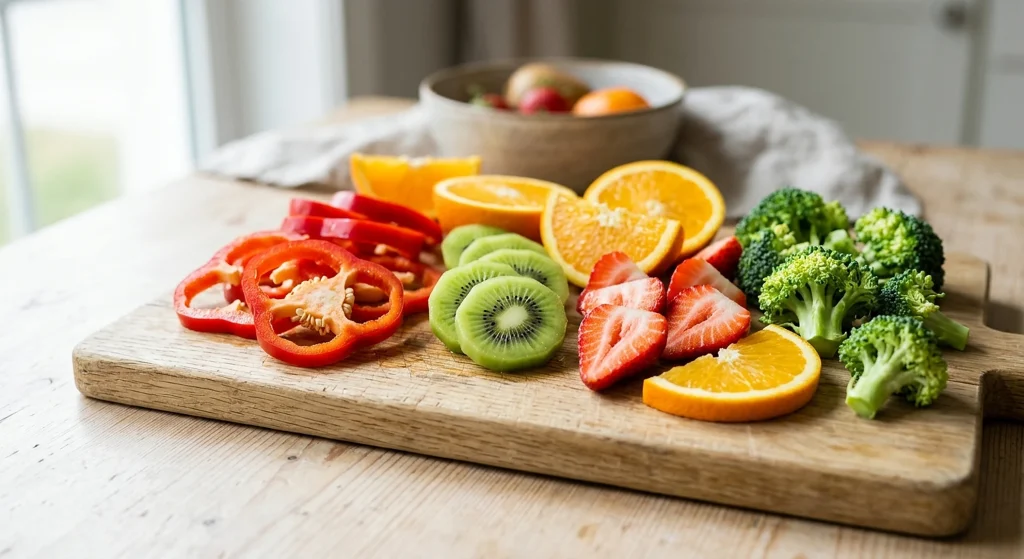
As the cold season begins, doctors are calling for flu and Covid vaccinations, while nutrition experts are highlighting sources of vitamin C that support the immune system. Although no single food prevents illness on its own, a 120-gram orange contains about 62 mg of vitamin C, and half a raw red bell pepper contains about 100 mg. According to the NHS, adults aged 19-64 need 40 mg of vitamin C per day.
According to nutrition expert Rob Hobson, the richest sources are:
- Red pepper
- Blackcurrants
- Kiwi
- Strawberries
- Broccoli
- Brussels sprouts
- Citrus fruits
Vitamin C content in 80-gram servings:
- Strawberries: 46 mg
- Blackcurrants: 160 mg
- Broccoli: 63 mg
- Brussels sprouts: 48 mg
- Kiwi: 47 mg
Although potatoes contain 7-9 mg per 100 grams, they are considered an important source because they are consumed in larger quantities at meals. Vitamin C is water-soluble and not stored in the body, so it must be consumed every day; it helps with tissue repair and supports immune cells. While the NHS notes that evidence is insufficient to show that it prevents colds on its own, Dr. Leyla Hanbeck emphasizes that regular intake of vitamins D and C, along with zinc, strengthens the immune system.
Why it matters
This report serves a functional purpose by reminding readers that calls for vaccination and nutrition advice are on the agenda at the same time as the cold season approaches; it shows that there are two complementary paths for readers who want to protect themselves against winter illnesses. The fact that vitamin C is not stored in the body means it requires regular daily intake rather than high consumption all at once, and it is clear that the daily requirement of 40 milligrams can easily be met with ordinary portions. By contrast, the NHS’s warning that evidence is insufficient to show that it prevents colds on its own stands alongside experts’ view that it strengthens the immune system; this distinction makes clear that vitamin C should be positioned not as a shield that prevents illness, but as a daily habit that supports immunity. The extent to which regular intake strengthens the immune system, however, remains an open question that has not been definitively answered scientifically.