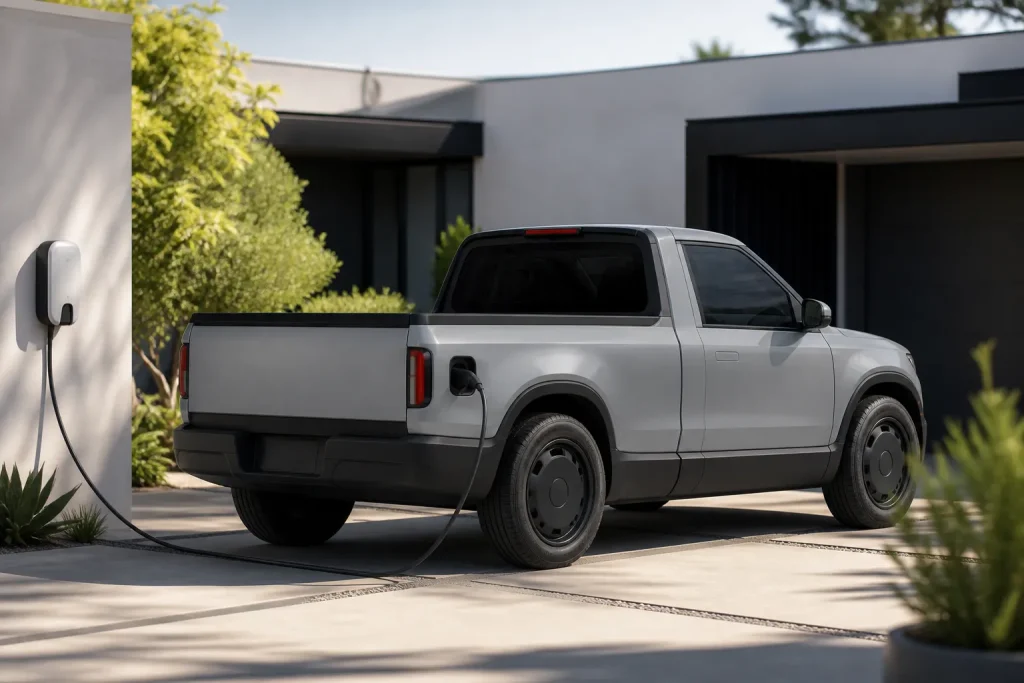
Electric vehicles, which account for less than 10% of new vehicle sales in the US, are losing market share. Slate Auto has developed a small, two-door electric pickup that emphasizes a low price rather than range and features in an effort to reverse this trend. The vehicle, which is shorter than a Honda Civic, has manual window cranks in its base model.
Slate’s 65 kilowatt-hour lithium iron phosphate battery offers up to 205 miles of range. By contrast, the most basic Tesla Model 3 can travel more than 320 miles on a single charge. Slate plans to price the base model below $25,000, with limited range and optional features.
It is stated that drivers in the US travel an average of less than 35 miles per day and that approximately 90% of personal vehicle trips are 20 miles or shorter. The Ford F-150 Lightning was discontinued in December 2025 because of its high price and the large battery required for its approximately 300-mile range. Slate plans to begin deliveries of pre-orders in late 2026.
Why it matters
Slate’s approach raises the question of whether long range and comprehensive equipment are necessary for every user in order for electric vehicles to become widespread. Daily driving distances and the prevalence of short trips indicate that a smaller battery and limited features may suit some usage patterns. However, this choice could limit the vehicle primarily to buyers who prioritize price over range and equipment; the comparison with the Tesla Model 3 shows that consumers will directly assess the range difference. The discontinuation of the Ford F-150 Lightning also indicates that cost pressures persist for electric pickup trucks with large batteries. The open question is whether Slate’s low-price target can attract a sufficiently broad pool of buyers for the limitations of the base model to be considered acceptable.