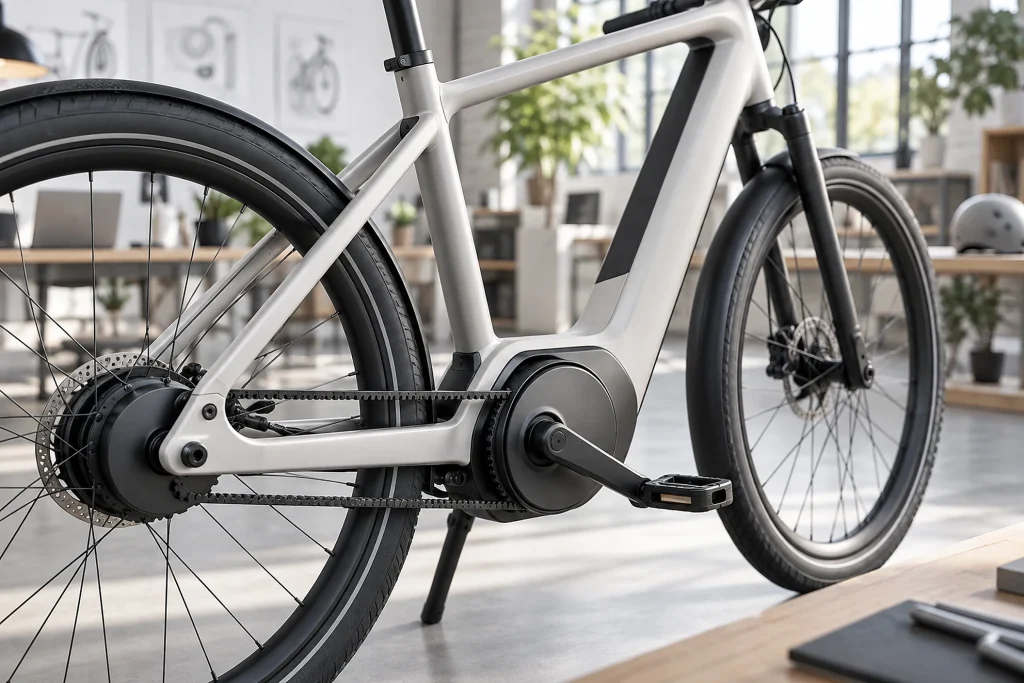
Customer deliveries of the TM-B, a software-controlled electric bicycle developed by Rivian’s micromobility company Also, have been delayed. Deliveries of the bicycle, introduced with a USB-C rechargeable battery, a removable seatpost and a pedal-by-wire system operated by software instead of a mechanical connection, were initially scheduled to begin in spring 2026, followed by summer. However, with fall approaching, the bicycle had still not reached customers; some reservation holders voiced their reactions on Reddit.
Also product manager Saul Leiken apologized for the delays in a 661-word letter published on Reddit. Leiken said the company was maintaining strict quality standards rather than rushing to ship an unfinished product. He said that, due to the “significant supply chain challenges” caused by the AI boom, there were not enough printed circuit board (PCB) and integrated circuit (IC) materials available for the software-assisted bicycle. The fact that some materials differed from the original design required additional engineering and testing.
The TM-B’s battery, offered in 538Wh or 808Wh options and targeting a range of 100 miles, also caused problems. Because its 240W power delivery exceeds current regulatory guidelines, Also is working with standards organizations to establish “new safety and testing protocols.”
The bicycle’s DreamRide drivetrain also requires high-precision manufacturing. While pedal movement charges the battery through a generator motor, a separate traction motor on the rear wheel is controlled by software through a Gates Carbon belt drive. Leiken acknowledged that production scaling had been slowed to maintain quality and that customers needed to be better informed about the delays.
Why it matters
The delay affecting TM-B shows that completing a software-controlled bicycle depends on more than software development alone; PCB and IC procurement, battery safety, and precision manufacturing must progress simultaneously. The challenges created in the supply chain by the artificial intelligence boom reveal that access to hardware components can be just as decisive as the delivery schedule for products of this kind. The fact that the 240W power delivery exceeds current regulatory guidelines, meanwhile, creates an additional compliance process between the technical design and safety testing. While this increases uncertainty for reservation holders, it also requires Also to adjust its production pace according to quality checks. The open question facing the company is how the new testing and procurement processes will affect the delivery schedule and how regularly customers will be informed about the matter.
Term: delay
Delay is the time between sending a request and receiving a response; it is felt directly in gaming and live streaming.