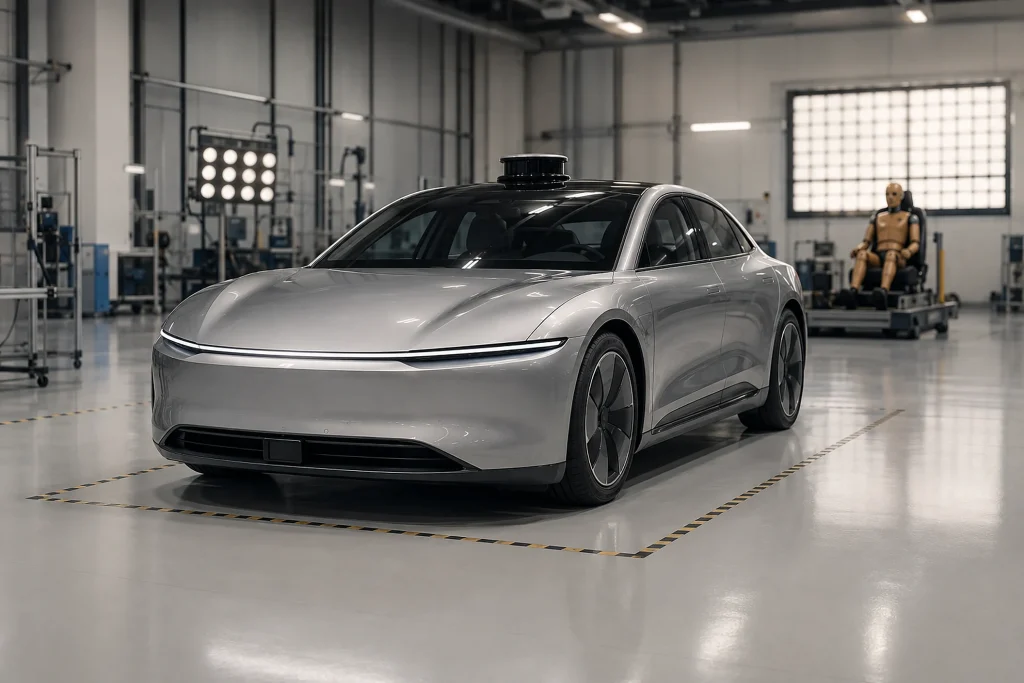
Tesla’s driverless vehicle Cybercab has come under scrutiny from the National Highway Traffic Safety Administration (NHTSA) after taking to public roads. The agency launched an “audit query” (AQ) to examine the technical data Tesla used when approving the vehicle and its certification process.
The lack of side mirrors, pedals and a steering wheel in the Cybercab is at the center of the review. These features are mandatory under the Federal Motor Vehicle Safety Standards (FMVSS). NHTSA will investigate whether Tesla’s assessment was based on the premise that some FMVSS rules do not apply to the Cybercab. The fact that Tesla does not appear to have requested an exemption from these rules is also among the reasons for the investigation.
In NHTSA’s review, which is estimated to cover 1,000 Cybercabs, it remains unclear whether that many vehicles actually exist on the market. There are currently 45 Cybercabs in Tesla’s Texas Department of Motor Vehicles records. NHTSA Administrator Jonathan Morrison said the agency supports the safe development of autonomous vehicles but is required to ensure that federal laws are enforced.
In the United States, automakers certify for themselves that their vehicles comply with FMVSS. In cases involving serious problems, such as missing legally required safety equipment, NHTSA can investigate this self-certification process. Such a review does not automatically halt production, but it can make the vehicle’s future uncertain.
A similar process took place in 2024 involving Amazon’s steering-wheel-less Zoox vehicle. While the NHTSA investigation was ongoing, Zoox was able to operate its vehicles only for demonstration purposes; it was allowed to charge passengers only two years later, last July. This raises the question of whether the Cybercab will be able to offer paid rides throughout the investigation.
Tesla plans to expand the Cybercab to other cities first and later sell it to individual customers for approximately $30,000. NHTSA is also investigating 3.2 million Tesla vehicles equipped with the Full Self-Driving system; this process could lead to a possible recall.
Why it matters
The investigation raises the question of the legal basis on which vehicles without steering wheels or pedals can be operated under existing federal safety rules. For Tesla, the issue is not only technical compliance, but also how the certification process based on manufacturers’ own declarations will be applied to this class of vehicle; the outcome could affect the conditions under which the Cybercab’s demonstration, paid-ride and possible sales plans can proceed. For public authorities and passengers, the central question is which forms of use of the vehicle will be accepted while the investigation is ongoing and to what extent the actual number of vehicles corresponds to the scope of the oversight. The Zoox example shows that regulatory scrutiny of similar vehicles can have an impact on commercial operations extending beyond the technical debate.
Background
Tesla is not a new name in the FikirPilot archive: we have published 3 articles mentioning the name in the last 90 days; the latest is dated September 4, 2026.