Mercedes driver Kimi Antonelli, who started from the back of the grid in Formula 1’s Italian round because of a new engine and other power unit components, staged a strong comeback. Antonelli moved close to the front when the race was stopped following Charles Leclerc’s heavy crash at Parabolica, then passed his rivals on fresh medium tires after the second start. He also overtook teammate George Russell, who had employed the theoretically faster one-stop strategy and led for a long time. Running into the gravel while trying to pass Russell did not halt his progress. Antonelli became the first Italian in 60 years to win the Italian Grand Prix.
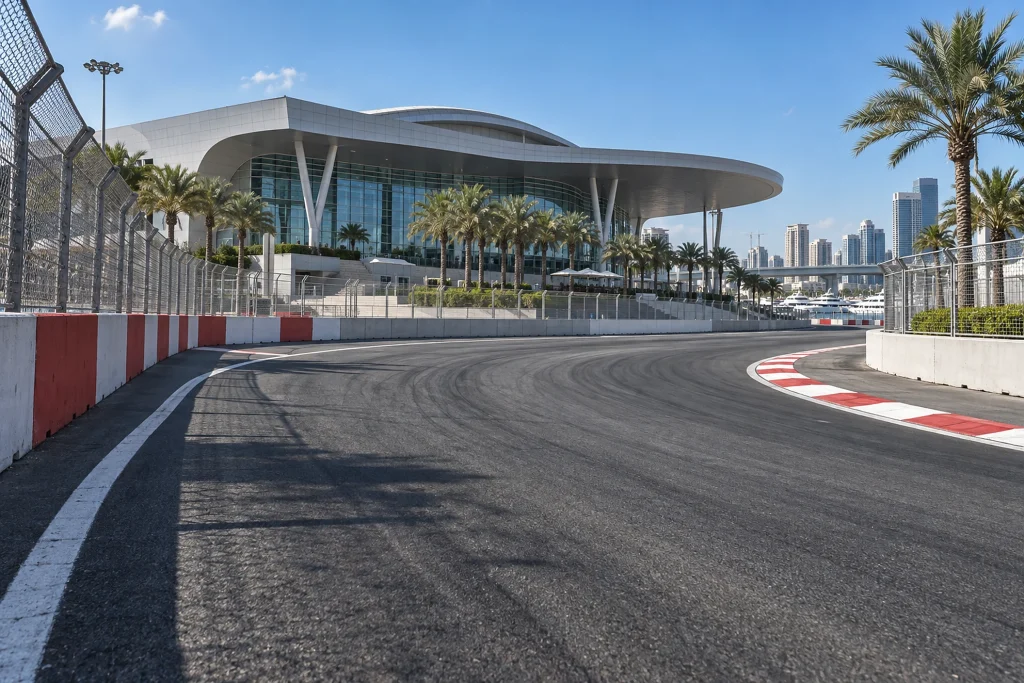
The next race was held at the temporary Madring circuit, built around a large exhibition center near the airport in Madrid. Construction of the 3.3-mile (5.4-km) circuit was delayed, partly because of heavy rain. The track’s long, banked corner, which passes beneath a highway, was designed to increase overtaking. Despite overtakes, crashes and red flags in the F2 and F3 support races, the F1 race was largely devoid of action.
McLaren driver Lando Norris was the fastest in qualifying and the race, leading from the start. However, a virtual safety car was deployed on lap 14 after Lance Stroll retired in his Aston Martin. Antonelli and Max Verstappen gained an advantage by pitting during this period. Warned about the possible scenario, Antonelli had reduced his pace beforehand. Norris missed the opportunity because he had already passed the pit entry; the virtual safety car period ended on the following lap, shortly before he reached the pit entry.
McLaren nevertheless brought Norris into the pits. Due to a problem with one wheel, his stop lasted more than seven seconds, roughly three times as long as a competitive pit stop in 2026. Norris rejoined the race in fifth and moved up to third after Russell and Leclerc made their pit stops, but could progress no further. Verstappen held off Norris to finish second. While Oliver Bearman and Oscar Piastri said overtaking on the track was very difficult, Verstappen noted that defending the middle line prevented overtaking. Lewis Hamilton retired early with a brake failure.
With this result, Antonelli reached a total of eight wins and opened an 81-point gap over Russell. With the nine-year Madring agreement continuing, changes are planned for next year at Turns 5-6, 13 and 20 to make overtaking easier. FIA President Mohammed Ben Sulayem also announced after meeting with Fernando Alonso that he wanted to provide Aston Martin with more development resources.
Why it matters
Antonelli’s rise at Monza and his ability to capitalize on the timing of the safety car in Madrid show that his 81-point lead over Russell stems not only from car speed but also from strategy and preparation for changing conditions. By contrast, Norris’ superior pace was not fully reflected in the finishing order because of the timing of his pit entry and a stop lasting more than seven seconds, highlighting how operational setbacks are difficult to overcome when overtaking opportunities are limited. Although the support races were action-packed at Madring, which will remain on the calendar under a nine-year agreement, the inability of F1 cars to overcome drivers defending the middle line showed that the track design does not produce the same outcome across different series. It remains unclear to what extent the planned changes to the turns will resolve this problem and how the FIA’s desire to give Aston Martin additional development resources will be implemented in terms of competitive balance.