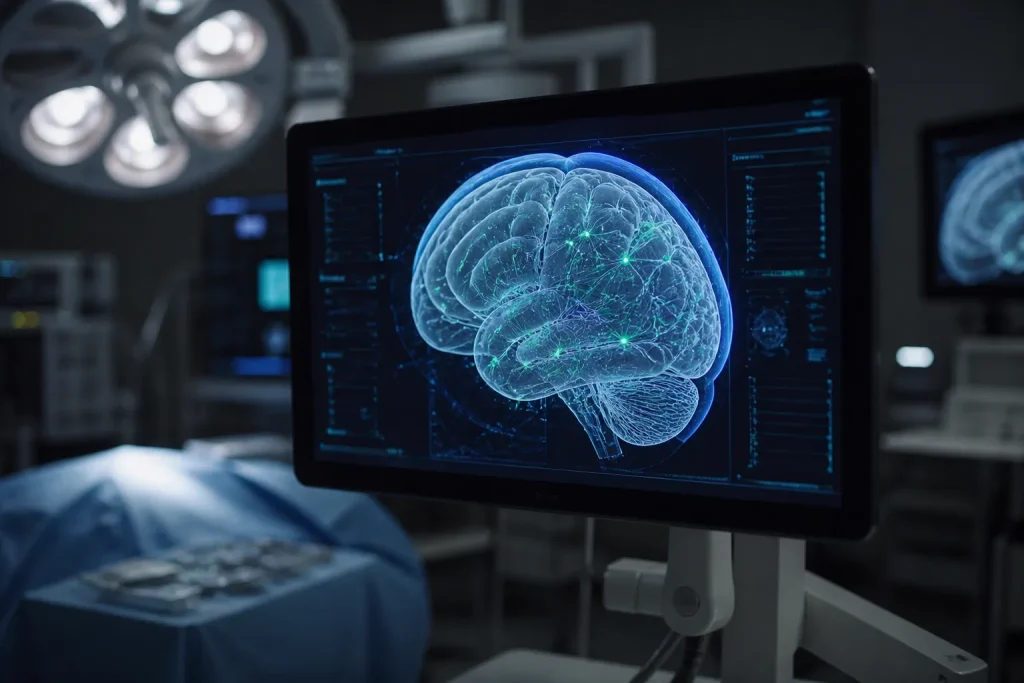
Surgeons at the National Hospital for Neurology and Neurosurgery (NHNN) in London removed a brain tumor with the support of an artificial intelligence system that assessed live camera footage captured during the operation in real time. Details of the operation, performed in May 2026, were disclosed on 27 August 2026 after the patient’s recovery process had been allowed to progress. The operation removed an 11-millimeter tumor from the pituitary gland of 48-year-old Rhys Hibbert. The patient, who faced the risk of vision loss and severe hormonal imbalance, recovered after the intervention.
Real-Time Monitoring of Anatomy and Technical Details of the Operation
In the operation, in which the system was used, final control remained with the human surgeons. Footage transmitted by the endoscopic camera through the nasal passage was processed instantly. In this procedure involving the pituitary gland, located immediately below the optic nerves and in very close proximity to critical blood vessels, even a deviation of just one millimeter could lead to paralysis, blindness or a life-threatening situation.
The artificial intelligence infrastructure provided real-time guidance to the surgical team by marking critical tissues and blood vessels in different colors in the live footage. Developed at University College London (UCL) under the leadership of Dr. Sophia Bano, the system transferred into its dataset the clinical experience that an assistant surgeon could gain in approximately 10 years in a period of about 10 months.
Clinical Trials and Success Rates
Technical findings from the technology’s laboratory and testing processes were included in a 2024 study published in the journal npj Digital Medicine. Offline evaluations conducted using 640 still images taken from 64 surgical videos showed that AI tracking increased anatomical labeling accuracy from 70.7% to 77.5%. The study noted that AI assistance significantly improved the performance of medical students in particular, raising their accuracy score from 66.2% to 78.9%. In the test group conducted without human intervention, the model achieved a standalone accuracy score of 79.1%.
Recovery Period with Vision Preserved
Rhys Hibbert said he began walking without assistance within a week of the surgery and returned to work shortly afterward; he stated that his visual clarity had fully returned following the operation. The clinical trial was conducted at the world’s first specialist neurosurgery hospital, founded in 1859, and was funded by the National Institute for Health and Care Research (NIHR). Experts say that AI tools based on live video analysis have the potential to minimize the margin of error in complex surgical operations.