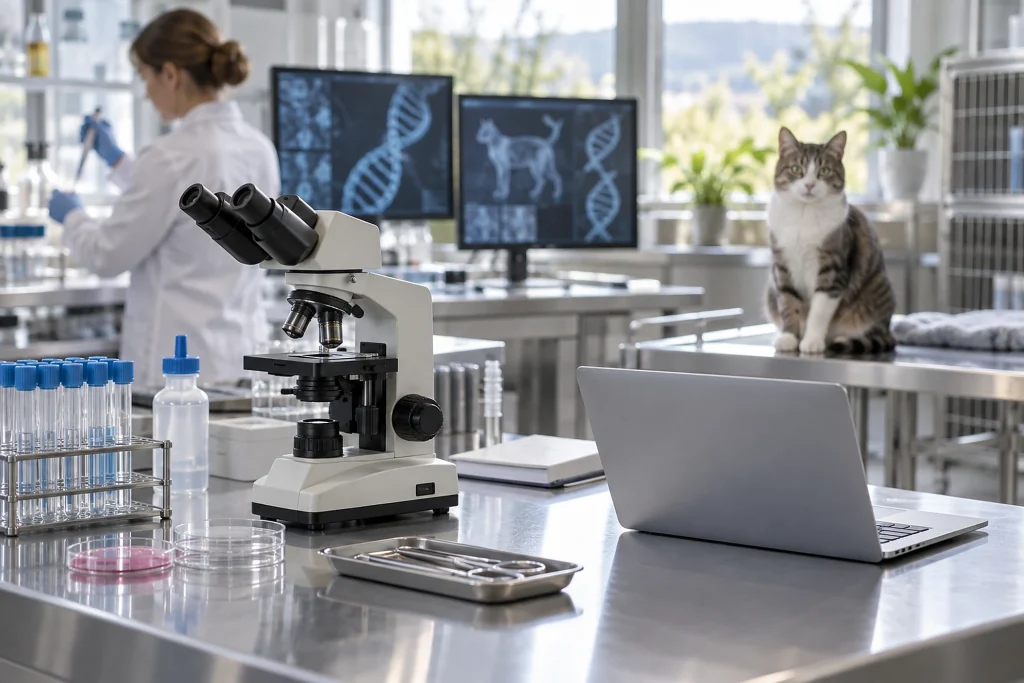
The team studying cancer genetics in cats found striking overlaps with human cancers in an analysis of tumors from 500 cats, the first of its scale. Dr. Geoffrey Wood of the University of Guelph said that cats’ exposure to hazards shared with humans, such as secondhand smoke and indoor pollutants, makes them an ideal model for investigating cancer development under real-life conditions.
The study, published in Science, identified “driver genes” that direct uncontrolled cell growth and factors shared by the two species. FBXW7 mutations were found in more than 50% of cat tumors in aggressive breast cancer; in humans, damage to this gene is associated with worse outcomes. Shared mutations were also detected in blood, bone, lung, skin, digestive system and brain cancers. Laboratory tests showed that tumors carrying this mutation were more sensitive to certain targeted chemotherapy drugs; the studies are still limited to tissue samples.
Cat cancer genetics had long been a blind spot compared with human and canine tumors. While the findings are being linked to precision oncology, the genetic database has been made available online for free.
Why it matters
The study’s main significance is that it turns cats into a comparative resource for understanding cancer biology—not only from a veterinary perspective, but also as living beings exposed to the same environmental conditions as humans. Shared genetic patterns between feline and human tumors provide a basis for examining the similarities and differences of the disease across species. In particular, the laboratory finding linking the FBXW7 mutation to sensitivity to certain targeted chemotherapy drugs offers a testable connection for precision oncology; however, the fact that this remains limited to tissue samples means it cannot be directly translated into clinical treatment. While the free genetic database may help reduce the long-standing data gap in this field, the open question is the extent to which shared mutations will explain treatment responses and outcomes in actual patients.