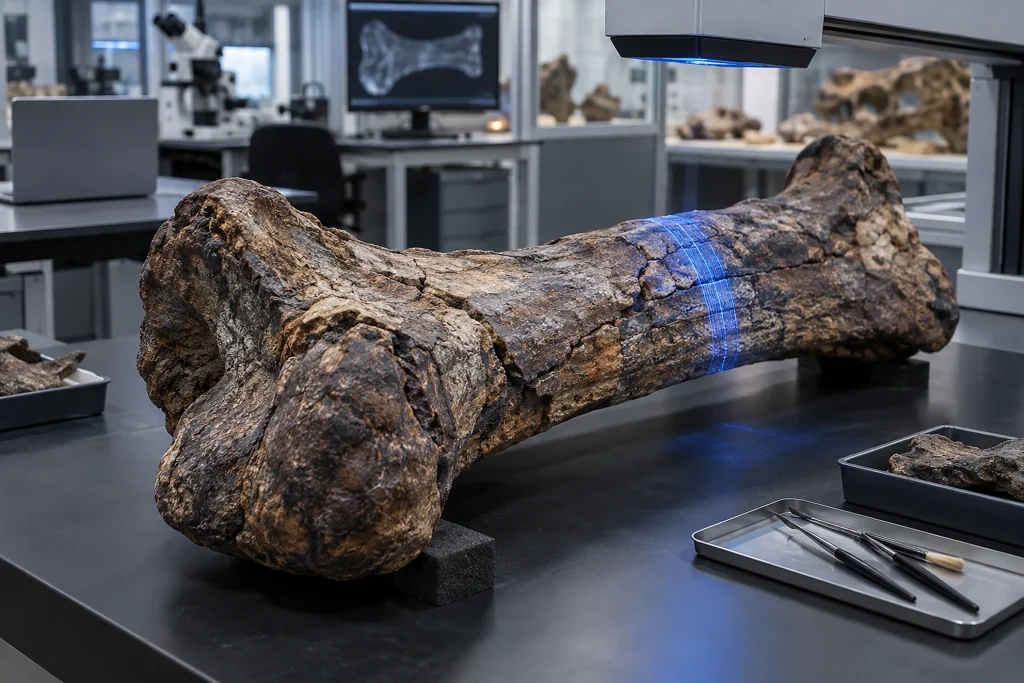
A mineralized network of blood vessels was found in the fractured rib of Scotty, the world’s largest known T-Rex fossil, which lived 66 million years ago. The rib fractured while the dinosaur was alive; its body formed new blood vessels for repair, but the dinosaur died before the bone had fully healed. Burial in a salt marsh may have helped preserve the vessels by slowing decomposition. Researchers used neutron and X-ray imaging together without cutting, drilling or damaging the fossil. X-rays revealed the dense bone, while neutrons showed hydrogen and soft tissues; this allowed the blood vessel network to be imaged in three dimensions. The technique could be used to compare injuries and healing in other fossils and to examine museum fossils without damaging them.
Why it matters
This study shows that paleontologists can trace different structures inside bones without resorting to interventions such as cutting or drilling to examine fossils. Using X-ray and neutron imaging together makes it possible to combine information about dense bone, hydrogen and soft tissue in the same examination, which could allow more detailed comparisons of healing processes within fossils. The approach is particularly important for specimens in museum collections that could be damaged by physical intervention. However, it is not yet clear how widespread traces of blood vessels are, whether injuries in other fossils were preserved in a similar way, or to what extent this finding can be generalized to the healing processes of dinosaurs.