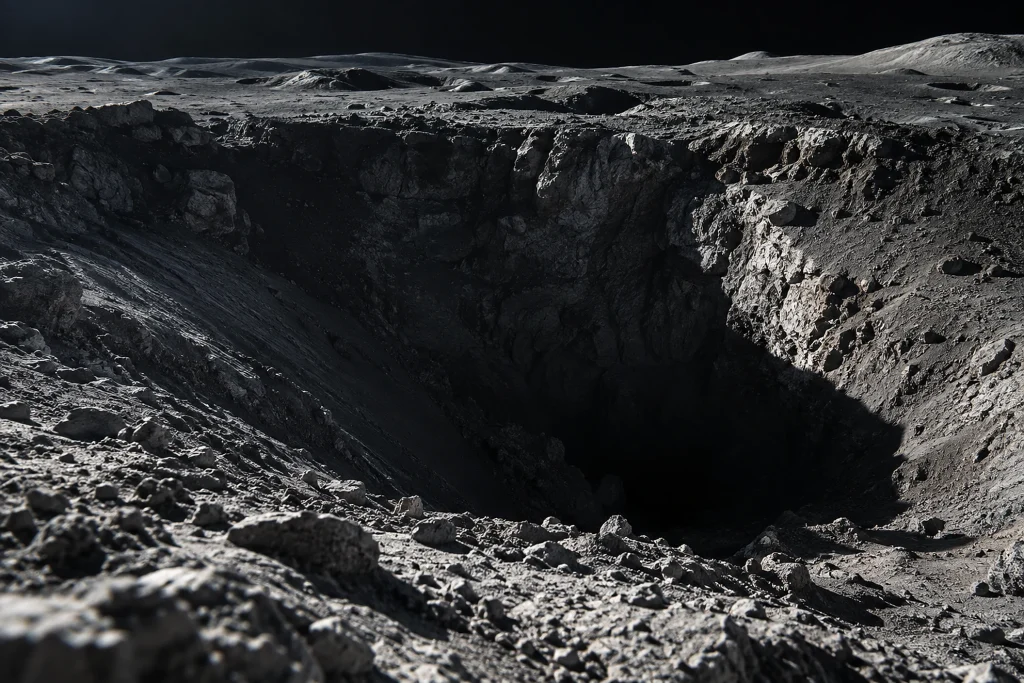
SpaceX CEO Elon Musk announced in February that they aimed to establish a self-growing city on the Moon in less than 10 years. In March, NASA also unveiled its 20-billion-dollar base plan, which relies heavily on SpaceX technology.
Research by Martin Elvis and Jonathan McDowell, published in Frontiers in Space Technologies on September 14, examined how long the ice in polar craters, which are around -165 degrees and have not seen sunlight for 4 billion years, could support settlements. According to NASA, most of the ice is there; some estimates put the total amount of water at 1 billion tons. This amount could sustain a city of 1 million people for only two years without recycling, or for at least 100 years if 98 percent of the water is recycled. However, Elvis said the best current estimates are about 30 times lower than 1 billion tons, in which case a small city would run out of water after around 10 years. A village of a thousand people or a town of 10 thousand could survive for several centuries. More efficient recycling, horizontal farming, reducing meat consumption and obtaining water from asteroids are among the options. Meeting energy needs with solar panels is seen as easier.
Why it matters
This calculation shows that water supply, rather than energy production, could impose the decisive limit on population size and duration in lunar settlements. For SpaceX’s city goal and NASA’s base plan, which rely largely on the same technology, the scale of the settlement depends directly on which estimate of polar ice is accurate. While the highest water estimate could support a large population for a long time only with very high recycling rates, the current lower estimate makes the scale of villages and towns a more realistic framework. Recycling efficiency, farming methods and meat consumption therefore become factors that determine the water budget rather than mere lifestyle choices. The key questions that remain open are which estimate the total amount of ice in the polar craters is closest to and whether obtaining water from asteroids will be necessary.