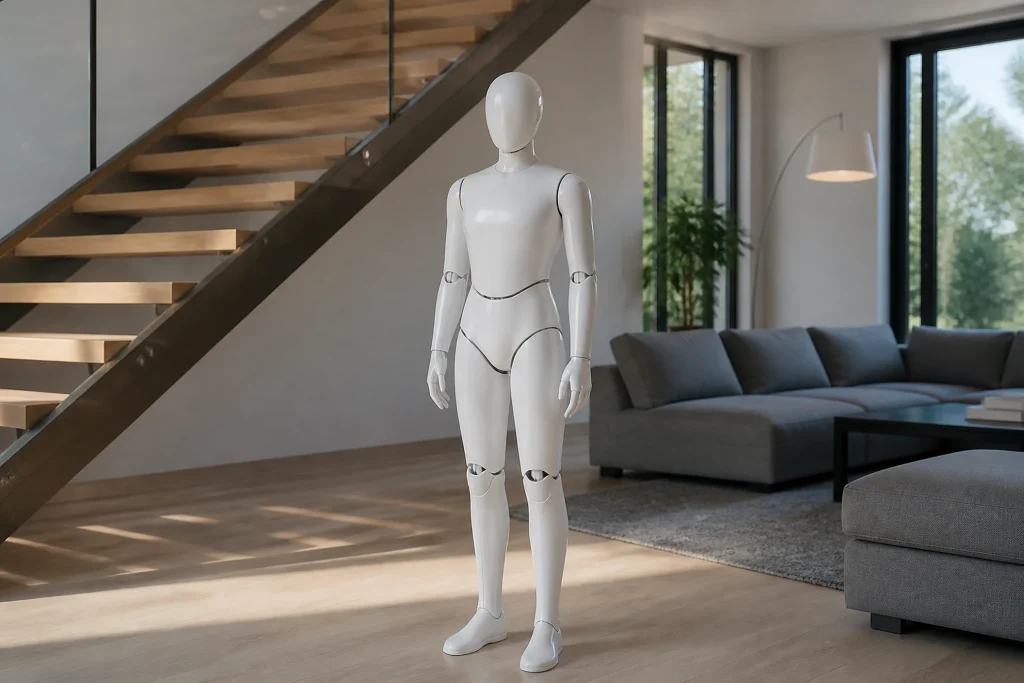
Humanoid robots are preparing to showcase their capabilities at the IFA technology fair in Berlin, while the usefulness of full-sized robotic servants for household chores is being debated. Dozens of humanoid robots, including models designed for homes, were showcased at CES. US-based 1X has begun testing its $20,000 Neo robot in homes, where it relies heavily on remote support. However, the cluttered and unpredictable nature of homes, along with safety risks posed by stairs and heavy machinery, make humanoid robots impractical.
According to Jennifer Pattison Tuohy, who has tested robot vacuums, mops, lawn mowers, cat-litter cleaning devices and cooking appliances, it is also difficult for a single machine to perform many different tasks successfully. None of the humanoid robots she encountered at CES could open a bottle of laundry detergent; manufacturers said they would first need to be trained to do so.
A more practical option could be an AI-powered “robot brain” that manages autonomous devices in the home. Such a system could detect that dog food had been spilled and activate the robot vacuum, start the washing machine when energy prices fell, or assign the lawn-mowing robot a task when necessary. Samsung’s unreleased Ballie robot and LG’s CLOiD model are based on this approach. Amazon Alexa Plus and Google Gemini for Home also have similar long-term goals, although none has yet come close to reaching this point.
Tuya will introduce Doova, an AI-powered home companion designed for elderly people living alone, at IFA. The short, wheeled robot has no arms and uses “dynamic facial expressions”; it can follow its owner around the home, provide assistance in an emergency, and initiate a video call with the family if it receives no response. It can also hold conversations and control the lights, curtains, and kitchen and bathroom appliances. Its price and release date have not been announced. However, camera-equipped robots that move around the home raise serious privacy concerns.
The option between a full-sized humanoid robot and an armless assistant is wheeled models with arms. LG’s CLOiD robot has arms offering 7 degrees of freedom and five fingers on each hand that can be moved independently. CLOiD can perform simple tasks such as folding clothes, taking items out of the refrigerator, and loading the washing machine, while also managing smart devices. LG is training hundreds of CLOiD robots in Seoul; by the end of the year, it plans to create approximately 100,000 hours of training data using Nvidia Cosmos models, equivalent to 12 years. In the future, systems consisting of different machines managed by a central AI may come to the fore instead of a single robot.
Why it matters
In the debate over home robots, the main distinction is becoming clear between a single humanoid machine taking on all tasks and different devices in the home being coordinated by a shared artificial intelligence. While this approach reduces the need to physically perform every task in a cluttered and variable home environment, it does not eliminate the question of under what conditions robots can operate reliably. Use cases such as accompanying older people and connecting with family members in emergencies show that the technology is not limited to cleaning and carrying tasks; however, privacy remains a fundamental issue with camera-equipped devices because of the possibility of monitoring inside the home. The need to train models reveals that daily tasks are more complex than demonstrations suggest. The open question is the extent to which these systems can be adapted for homes in terms of price, safety, and data use.