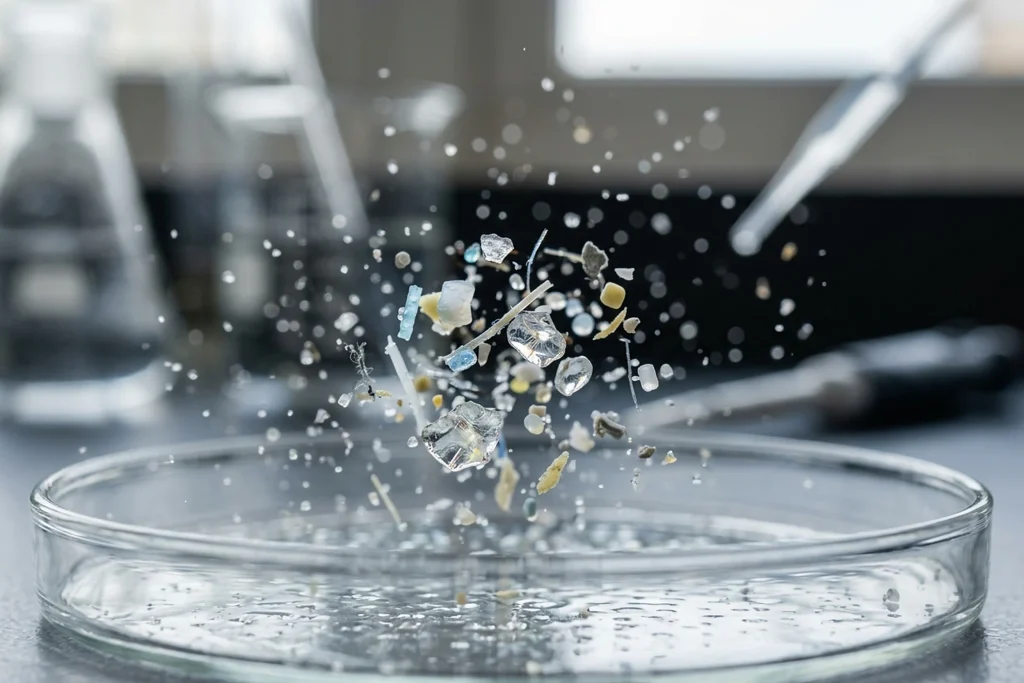
The Myth That Plastics Are Chemically Inert in Water Is Being Debunked. This belief is now being shaken. In a new study published in the journal Nature, Naixin Qian and their team demonstrated that common plastics produce highly reactive hydroxyl radicals (HO•) upon contact with water. The energy comes from the electrostatic effect. Among the six types of microplastics used in the experiment, the more hydrophobic ones in particular showed higher levels of free radicals. Free radicals are short-lived. These molecules are highly reactive structures that can cause DNA damage at the cellular level. In the study, lethal damage was observed when mouse red blood cells were exposed to polystyrene (PS) microplastics, and it was noted that the electrostatic effect also attracts charged biomolecules to the plastic. The findings show that micro- and nanoplastics can harm organisms in at least three ways. Whether these particles are truly harmful and whether they can be reliably detected in biological tissues is still being debated.
Why it matters
For a long time, the assumption that plastic is a material that does not react in water and is therefore relatively harmless formed the backdrop of environmental and health risk assessments; because this study weakens that assumption at the laboratory level, it is a candidate to land on the agenda of the bodies that set standards as well. Once it became clear that the harm could stem not only from the physical presence of the particles but also from the chemical reactions they produce on contact with water, hydrophobic plastic types appear to have become a category that requires separate monitoring. The finding therefore concerns not only the basic sciences but also public health authorities and those working on water safety. That said, the results are based on laboratory conditions limited to mouse blood cells; whether the same mechanism operates in the human body is unknown. The fact that even a reliable method for detection in tissues remains controversial shows that the study raises more questions than it answers.