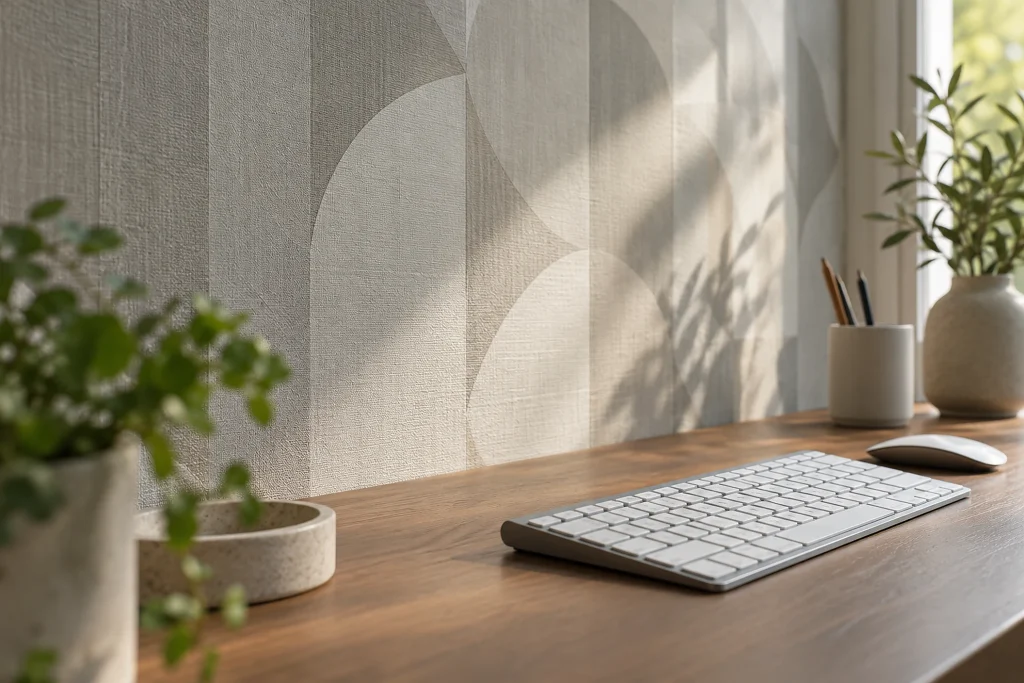
Researchers at Binghamton University have developed a wallpaper-like surface that converts water vapor in the air into electricity. Introduced in Advanced Energy Materials, the moisture-electric generator (MEG) system collects moisture with glycerol at the edges, while a special wax layer in the center directs the movement of water; this movement generates electricity. Since the connections are located at the back, the surface does not look like an electronic setup from the front. The researchers powered a wireless keyboard without batteries using a 1,596-unit system. Although the technology is not sufficient for devices that require high power, it could be used for sensors, smart thermostats, and IoT devices. The system reduced relative humidity from 38% to 32% in tests; however, it did not demonstrate dehumidification capacity comparable to that of an air conditioner. Running a refrigerator or television is not possible for now. Low-power devices could obtain energy directly from the environment in which they are located.
Why it matters
This study opens up discussion about whether energy for low-power devices must be provided solely through battery replacement or external connections. The potential value for sensors, smart thermostats, and IoT devices lies in their ability to make use of moisture in the environment where they are located and in reducing dependence on installation. The fact that the surface does not reveal its electronic hardware from the front differentiates the technology for indoor applications where visibility is important. However, its limited power capacity shows that the method cannot be applied to devices requiring high amounts of energy, while the drop in humidity also indicates that it does not provide an independent climate-control function. Therefore, the key question that remains is how steadily the system will operate under different environmental conditions and during long-term use.