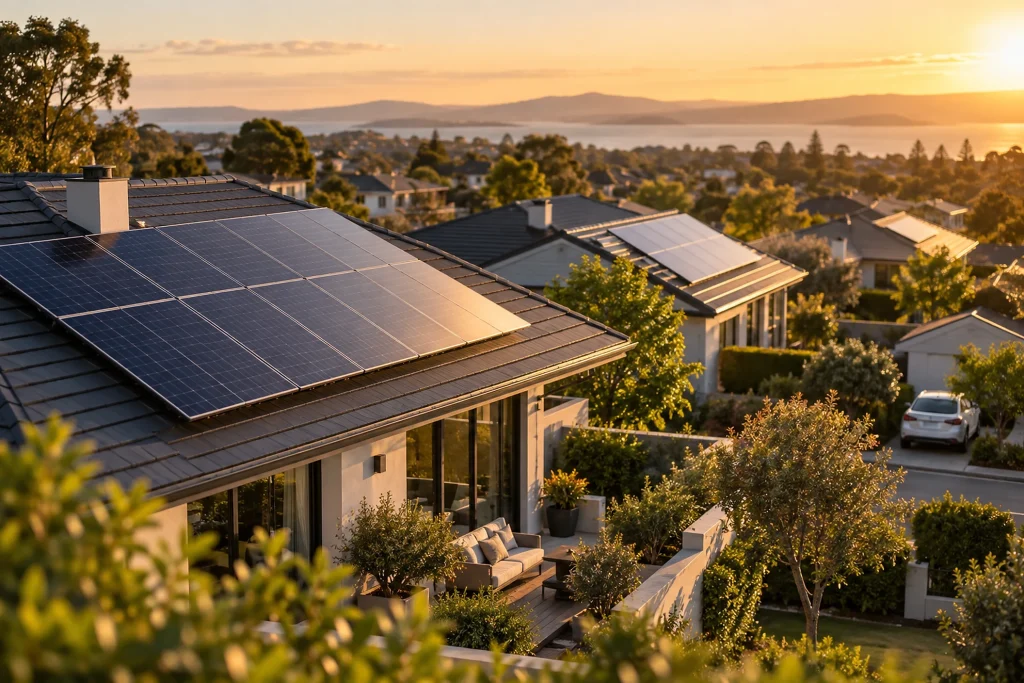
Cheap Chinese-made photovoltaic panels are rapidly expanding small-scale rooftop and ground-mounted solar power worldwide. Panel costs have fallen from $5-$6 per watt at the start of the millennium to about 12 cents today. Wood Mackenzie estimates China’s production capacity at about 1.36 terawatts. According to the Energy Institute, global small-scale solar capacity reached nearly 1.2 terawatts by the end of 2025; in terms of theoretical capacity, this is roughly three times the size of the global nuclear power fleet.
Cheap panels have become an important option for businesses and households in countries where electricity is expensive, scarce or unreliable. Bestway in Pakistan plans to add 6.34 megawatts to its existing 26 MW of capacity by the end of the year; solar power supplies more than a quarter of the electricity used by the company’s Chakwal cement plant, which produces more than 3 million tons annually. Ember estimates that Africa will install about 17 gigawatts of new solar capacity this year, most of it at factories and businesses.
Rooftop solar capacity in the Philippines is estimated to have nearly doubled in the 12 months through April, while residential systems can recoup their investment in just over three years. Meralco said these systems generated 372 gigawatt-hours of electricity in the first six months of the year. India’s subsidy program, launched in February 2024 with a budget of about $8 billion, has installed panels on more than 5 million homes and is reaching about 500,000 new households each month. In Britain, 800-watt plug-and-play panels have been sold in stores since the end of August, while some US states are also making it easier to use similar systems.
However, self-generation is putting pressure on electricity companies’ revenues and grid financing. In South Africa, Eskom attributes about 7% of the 11.7 terawatt-hour decline in sales in the year ended in March to rooftop panels and batteries. In Pakistan, wealthy paying customers switching to solar power is increasing the risk that infrastructure costs will be shifted onto poorer groups.
Technical challenges are also growing. Although renewable energy did not directly cause the one-day outage in Spain and Portugal, the system was reportedly not adequately adapted to the growth. In Australia, low daytime demand, reverse power flows and sudden drops in generation due to clouds are making grid management more difficult. Batteries, new tariffs, installation registries, weather forecasts and AI-powered models are being developed as solutions.
Why it matters
This scale means that electricity generation is being partially dispersed from large power plants to households and businesses; users are becoming less dependent on the grid, particularly in places where electricity is expensive, scarce or unreliable. However, as customers with greater ability to pay generate their own electricity, electricity companies’ revenue base narrows, creating the risk that the grid’s fixed infrastructure costs will shift to poorer consumers. Falling daytime demand, reverse flows and sudden weather-related changes in generation also show that installing panels alone is not enough; battery, tariff, registration and forecasting systems need to be upgraded together. The key question that remains is how to preserve grid reliability while encouraging self-generation and how costs should be shared among consumers.
Term: grid
The electricity grid is the transmission and distribution network that connects generation facilities to consumers; supply and demand must be balanced in real time.