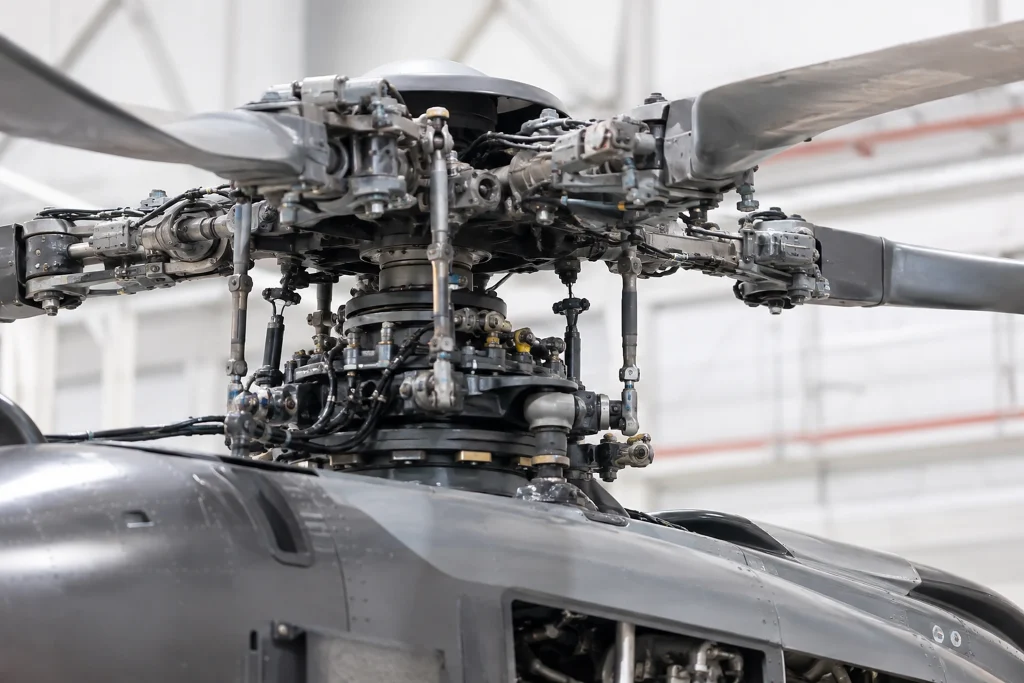
The CH-53 Sea Stallion entered service in 1966. The rotors of the helicopter, which can carry heavy loads, consist of 6 or 7 blades, depending on the model. The safety challenge was detecting metal cracks in the rotor blades before they turned into disasters. In early models, the main load-bearing spar was made of extruded aluminum, while in the CH-53D and other variants it was made of cold-formed titanium. Since the blades were pressurized with nitrogen, cracks caused gas leaks; the barber pole indicator on them quickly alerted technicians to the problem on the ground. However, when a failure began during flight, the pilots had to be warned immediately. Using electronics on rotating blades and running cables through the rotor head was neither reliable nor practical at the time. The solution was IBIS, short for Inflight Blade Monitoring System. The system detects beta radiation emitted by the Strontium-90 in the pressure gauge with a Geiger counter inside the helicopter, eliminating the need for electronics on the battery or the blade. Today, composite blade failures in the newest CH-53 versions are monitored using fiber optics, while IBIS continues to be used in older variants.
Why it matters
This system shows that safety in heavy-lift helicopters depends not only on the durability of the rotor blade but also on whether a failure can be detected during flight. Developed at a time when applying electronics to rotating components was difficult, the method bridges the gap between checks performed on the ground by maintenance crews and pilots’ awareness during flight. For this reason, the issue is particularly important for units operating older CH-53 variants and the technicians responsible for maintaining these aircraft. The shift to fiber-optic monitoring in newer versions demonstrates that different technical responses have been developed to address the same safety need in different generations of helicopters. How much longer IBIS will continue to be used in older variants is left open in the text.