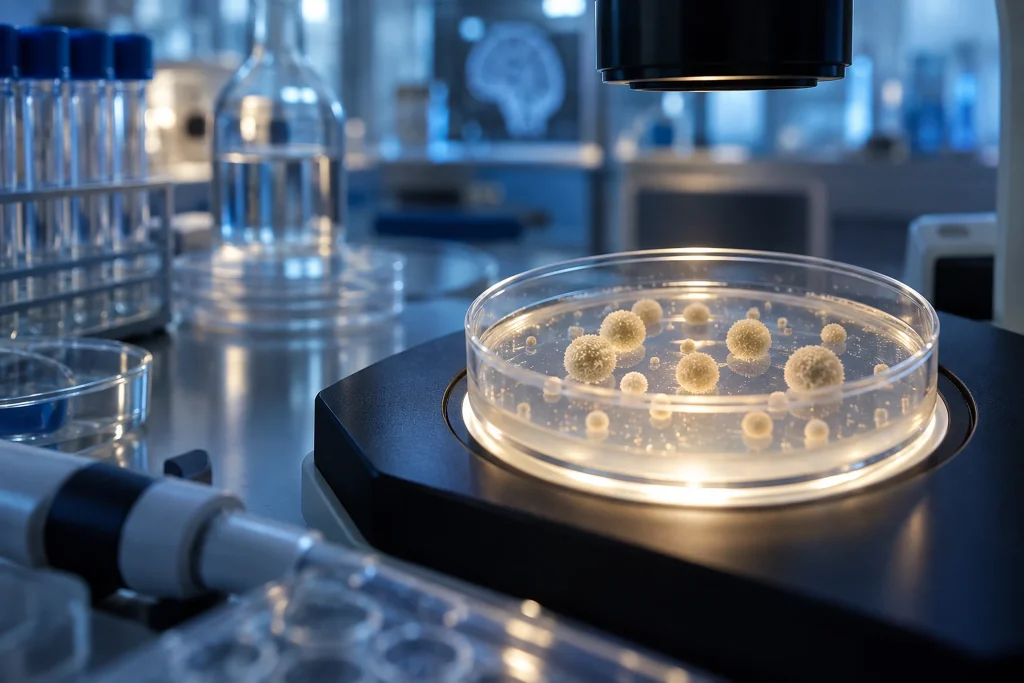
Scientists transplanted laboratory-grown human brain tissue into genetically engineered mice whose cerebral cortex development had been impaired. The study, published in Nature, reported that cortical organoids produced from skin or blood cells via stem cells formed functional connections with the mouse nervous system. Sergiu Pasca of Stanford University stated that transplantation immediately after birth enabled the tissue to grow extensively. Various human cells, including rare von Economo neurons, developed in the transplanted tissue. While the researchers referred to these animals as “xenocortical mice,” they rejected descriptions such as “humanized mice” or “creatures with mini brains.” The model is expected to accelerate research into autism, epilepsy, cerebral palsy, schizophrenia and early developmental damage caused by oxygen deprivation. Low oxygen caused damage and motor coordination impairments in human cells; memory differences were also observed in the animals.
Why it matters
This approach offers a research model that makes it possible to examine developmental damage occurring in human cells in interaction with the nervous system. In particular, the observation of low oxygen alongside both cellular damage and differences in motor coordination and memory may enable the effects of early developmental periods to be assessed at different levels. In terms of autism, epilepsy, cerebral palsy and schizophrenia research, the key question for subsequent studies will be which findings the model reliably reflects. The extensive growth of human tissue in mice and its formation of functional connections show that the methodological limits and ethical explanations of such experiments are also an integral part of the research.