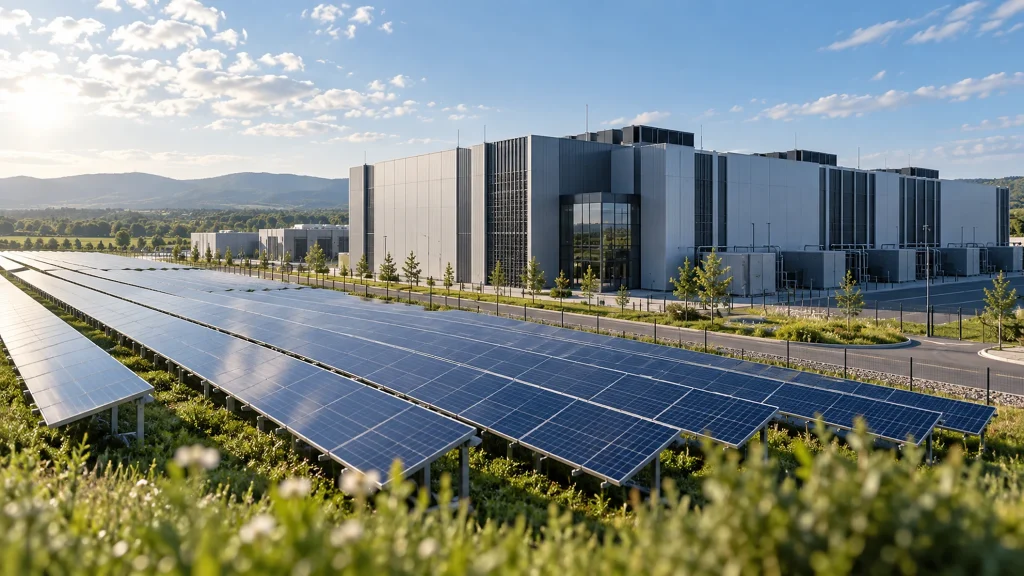
Massachusetts has introduced new clean energy rules for data centers larger than 25 megawatts. Under an executive order issued by Governor Maura Healey, facilities with peak demand exceeding 25 megawatts will be required to supply their own electricity and guarantee that this energy complies with the state’s clean energy requirements. Healey prefers clean energy to be generated at the facilities; if that is not possible, companies will soon have to finance the construction of new generation capacity or pay into a fund to protect electricity consumers.
The state also instructed communities to “refrain from signing confidentiality agreements” related to data center projects. To enable the new restrictions to be implemented, Healey temporarily halted applications for data center sales tax exemptions that took effect last month.
Massachusetts’ clean energy standard calls for approved sources such as wind, solar and hydroelectric power to be used at specified levels. These sources will account for at least 40% of total electricity generation in 2030, and the share will increase over time. However, the governor’s office announced that data centers would be required to meet 100% of their electricity demand with clean energy generation.
With this move, Massachusetts has become the third state in the past three months to restrict data center investments. Texas Governor Greg Abbott required in August that all new data centers in the state be overseen by the Public Utility Commission and grid operator ERCOT. The Governor of New York halted construction in July of new data centers of 50 megawatts or larger.
As public opinion turns against data centers, the technology sector is responding in kind. The pro-AI super PAC Leading the Future, funded by Marc Andreessen, Ben Horowitz and Greg Brockman, is buying ads aimed at influencing voters in battleground states ahead of the midterm elections.
Why it matters
The regulation changes how data center projects with high electricity consumption relate to the state’s energy policy by placing responsibility for energy costs and compliance with clean generation directly on operators. If clean electricity cannot be generated at the facility, the requirement to finance new capacity or pay into a consumer protection fund brings the question of how costs will be shared to the forefront. The call for communities to avoid confidentiality agreements aims to make projects more visible and accountable at the local level; however, it is unclear how this will affect decision-making processes. The suspension of applications for tax exemptions shows that the policy affects not only energy use but also the incentive framework for data center investments. Together with the steps taken in Texas and New York, the development shows that data centers are facing regulatory pressure from states.
Term: data center
A data center is a facility where servers are housed alongside cooling systems and uninterrupted electricity; debates over the electricity and water consumption of AI investments revolve around these facilities.