Researchers from the Institute of Industrial Science, The University of Tokyo and collaborating institutions studied optical structures inspired by the “Smith hat” shape, which solved the decades-old Einstein problem in mathematics. The study, published in Nature Communications, found that these structures produce unusual chiral diffraction patterns in light.
The Einstein problem asks whether a single tile shape, known as a “monotile,” can cover an entire surface without forming a repeating pattern. Researchers discovered the Smith hat, the first aperiodic monotile, in 2023. This pattern, which appears irregular at first glance, is constructed from a honeycomb lattice.
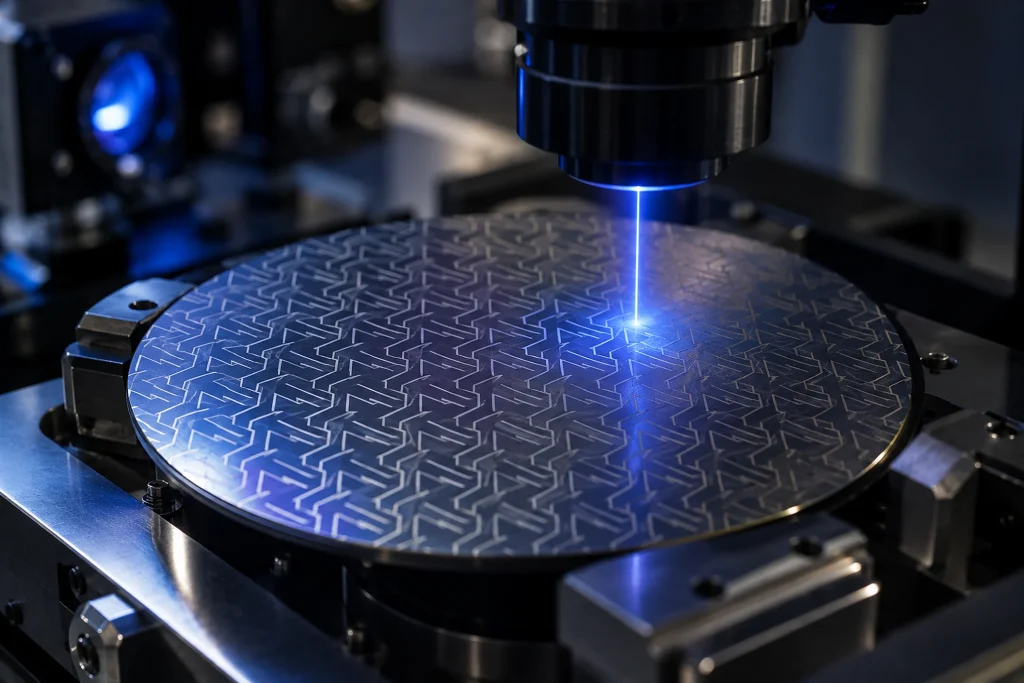
Using electron-beam lithography, the team fabricated nanoscale examples of the pattern on silicon nitride films. When the structures were illuminated with a laser, pinwheel-like diffraction patterns emerged that differed from those seen in conventional quasicrystals. The pattern’s lack of mirror symmetry also caused light to exhibit a chiral response. Chirality refers to the inability of a structure and its mirror image to be perfectly superimposed.
The diffraction patterns were found to vary depending on the direction and polarization of the incident light, while the optical behavior was reversed when mirror images of the physical structures were created. The team, which included Yuto Moritake and Masaya Notomi, said the findings open up a new field for examining the relationship between symmetry, chirality and aperiodicity. In the future, these structures could contribute to optical devices designed to control light and polarization.
Why it matters
The fact that the Smith hat’s mathematical nonperiodicity has a measurable counterpart in nanoscale optical structures connects an abstract tiling problem with experimental photonics research. Its production of diffraction patterns unlike those of conventional quasicrystals shows that the optical response depends not only on the material but also on the symmetry of the pattern and its inability to be superimposed on its mirror image. The behavior, which varies with the direction and polarization of light and is reversed in the mirror-image structure, makes it possible to test the relationship between symmetry, chirality and nonperiodicity on the same platform. The findings therefore offer a different design geometry for researchers working on light and polarization control, while leaving open the question of the extent to which the observed properties can be used in optical devices in practice.