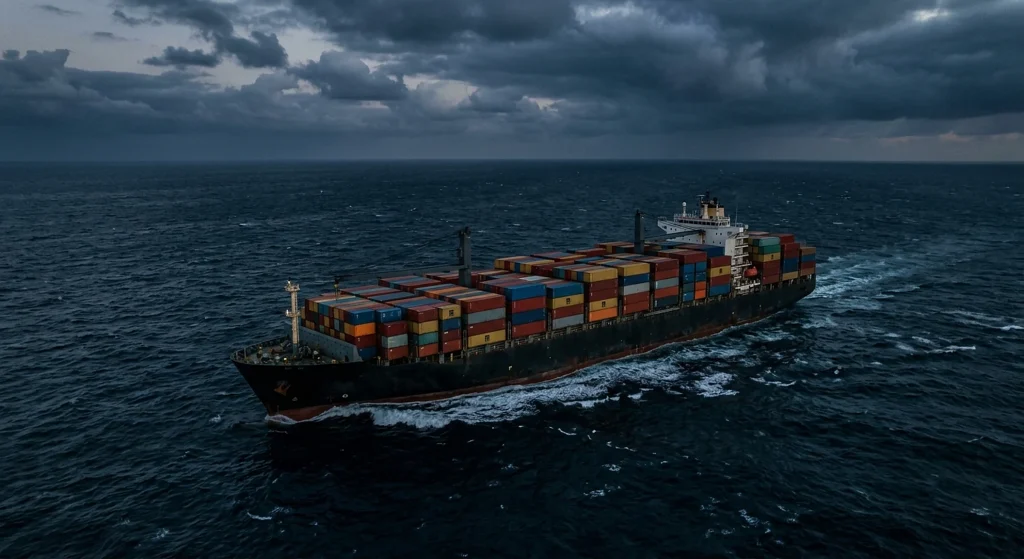
Over the past 500 years, land has been at the center of conflicts, while the oceans remained largely outside state sovereignty. Attempts to dominate the seas failed; during the Cold War, the United States and the Soviet Union also steered clear of ocean rivalry. Governments agreed on treaties and institutions guaranteeing freedom of navigation; coastal states were granted territorial waters and an exclusive economic zone.
Michael Albertus, a professor of political science at the University of Chicago, argues in an analysis for Foreign Affairs that this system is collapsing; he cites the Houthis’ disruption of maritime traffic in the Bab el-Mandeb and the conflict around Hormuz as examples. US President Trump floated a demand for fees for transits through Hormuz in July, then backed down. While Russia is increasing its control in the Arctic, China is building artificial islands in the South China Sea; the US is expanding its influence over the seabed, and many countries are preparing to extract rare minerals.
In his book “The Return of Conquest,” Albertus notes that a partition of the oceans would make the world poorer and more dangerous, and that global trade would come under threat. Following Iran’s intention to charge transit fees in Hormuz, Indonesia’s finance minister hinted at a similar step for Malacca, then backed down; 29 percent of the oil supply transported by sea passes through that strait. China is disregarding the 2016 UN Convention on the Law of the Sea ruling; Russia, meanwhile, faces suspicion of cutting undersea cables.
Why it matters
The renewed struggle for influence over the oceans, which for centuries have remained outside state sovereignty, is shaking the most fundamental guarantee on which global trade rests. Because a large share of the energy transported by sea passes through a few narrow straits, every change to the rules on these routes directly affects the cost and security calculations of a broad range of actors, from energy-importing countries to the shipping industry. The transit fee proposals that were voiced and then withdrawn in Hormuz and Malacca demonstrate that this idea can now be tested in public. The construction of artificial islands, the race for seabed mining, and suspicions surrounding undersea cables are multiplying the signs that the binding force of the rules is weakening. The open question is whether this order, built through long compromises, can be repaired.