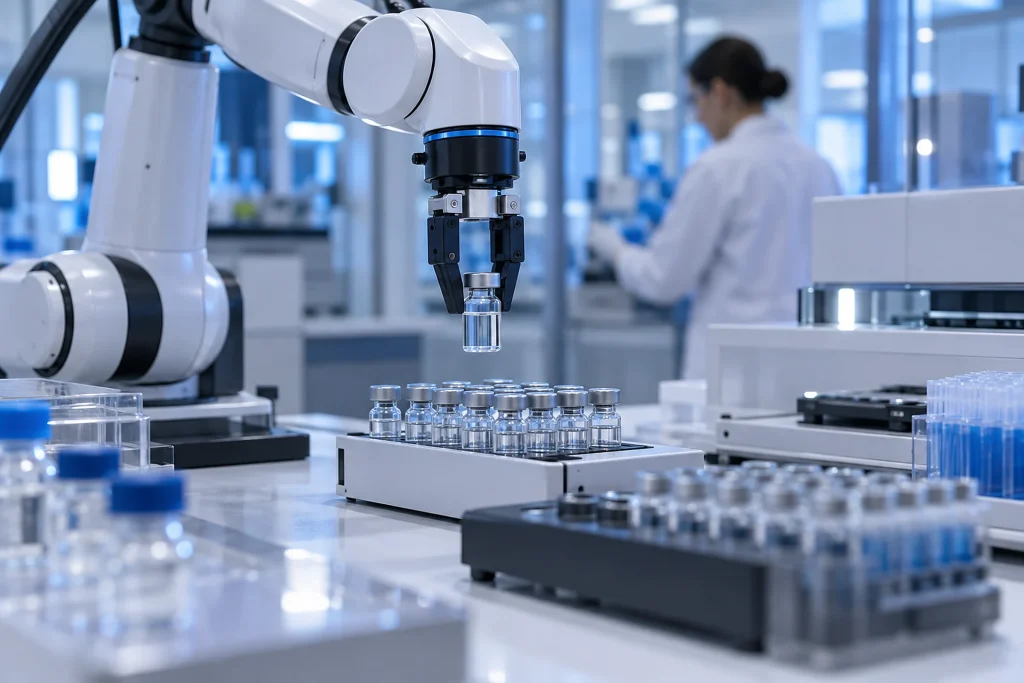
Anthropic announced that the biology laboratory it operates in the Bay Area, where it conducts physical experiments using artificial intelligence models, has made an important discovery. The company said it had found an enzyme system previously unknown in the DNA of bacteriophages, which infect bacteria and reproduce inside them, with some features resembling CRISPR. According to researchers, the system can cut, copy, and paste DNA; independent researchers will confirm the significance and novelty of the discovery.
CEO Dario Amodei acknowledged that a team from Stanford had discovered a system with similar characteristics, while saying that the finding was carried out “mostly, but not entirely” by Claude. This was presented as a result achieved in a short period of time for the laboratory, which was established in the spring. Claude’s work lasted 21 hours; the system used approximately 950 agents and consumed 210 million tokens.
Anthropic’s disclosure of its biology experiments came after warnings that safety testing needs to be improved because of the capabilities and potential dangers of artificial intelligence models. Amodei said he was concerned about the risk of bioterrorism, but believed that artificial intelligence could cure most diseases within 5-10 years.
The experiments were not conducted autonomously by Claude. The laboratory in the Bay Area is operated by human scientists; it conducts only low-biosafety-risk studies at the BSL-1 and BSL-2 levels, and does not use pathogens capable of infecting humans.
AI-assisted biology research is not limited to Anthropic. Studies on LLMs and CRISPR are being conducted at Stanford, while research on designing enzymes from scratch is underway at UC San Francisco; Google launched AlphaFold, the first AI-assisted biology tool, in 2020. Amodei said that, with appropriate safety measures, Claude could control laboratory equipment and conduct experiments autonomously in the future, but that this is not happening today.
Why it matters
The main significance of the finding is that it strengthens the possibility that AI could move beyond being a tool that merely scans existing knowledge in biology research and contribute to the emergence of new experimental results. However, what the system actually does and the extent of its similarity to CRISPR will not be considered clear until independent researchers have completed their examination. The fact that the experiments are limited to low biosafety levels overseen by human scientists shows that today’s application does not amount to direct and unlimited automation. At the same time, as such models become more involved in biological processes, safety testing will need to cover not only software output but also laboratory applications and potential avenues for misuse; studies at Stanford, UC San Francisco, and Google also show that the field is not limited to a single company.
Background
Anthropic is not a new name in the FikirPilot archive: we have published 30 reports mentioning the name in the last 90 days; the most recent was dated October 3, 2026.