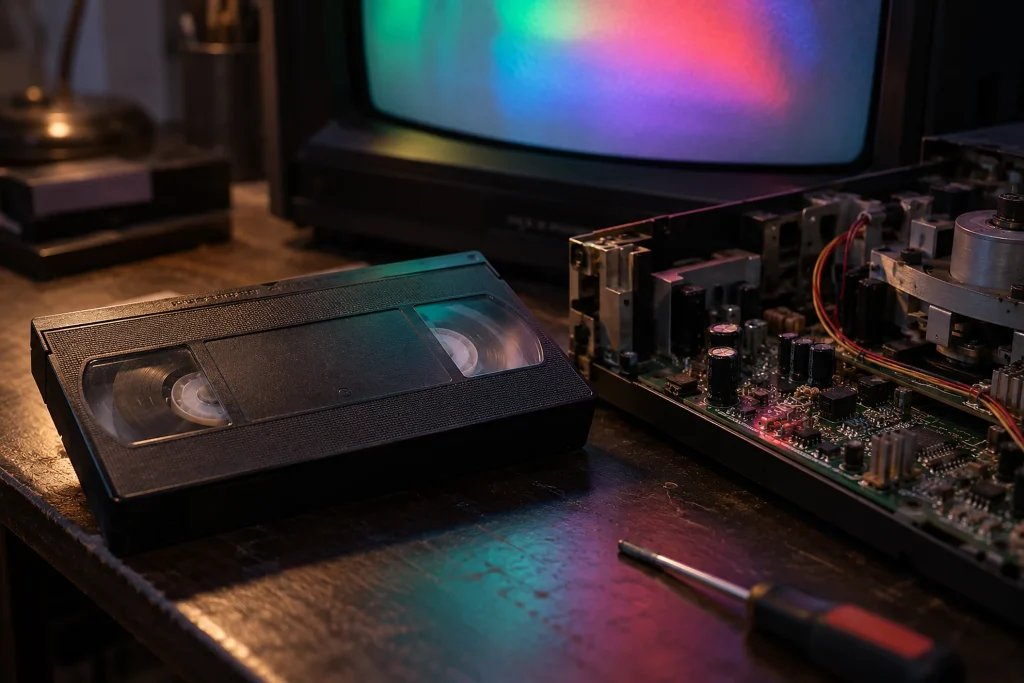
Although VHS-based games have existed since the era when players were found in millions of homes, they generally offered limited experiences. In ActionMax featured in Throaty Mumbo’s video, the player shoots on-screen targets with a zapper in “games” such as Sonic Fury. Based on this, he developed his own system. Using a DE1-SoC FPGA board and an RP2350 MCU, the project can be viewed on GitHub and, unlike ActionMax, enables interaction. The tape carries the game’s binary data and video streams. The DE1’s composite input decodes the data, while the RP2350 processes controller input. Background videos from Super Mario Bros., Night Trap, and Doom demos with pre-recorded video are shown. Bytecode expands the development options.
Why it matters
This project transforms VHS tapes from a medium that carries only pre-recorded footage into a gaming infrastructure that responds to player input. Thus, interaction is tied not so much to the tape itself as to a hardware arrangement that processes video, binary data, and controller signals together; this approach constitutes the key distinction from limited examples such as ActionMax. For hardware enthusiasts working with old video formats and those exploring game development options, the system demonstrates how physical media and programmable components can be combined. Its release on GitHub and use of bytecode show that the project is not limited to a demonstration, while also leaving open the question of how different content and experiences could be developed.