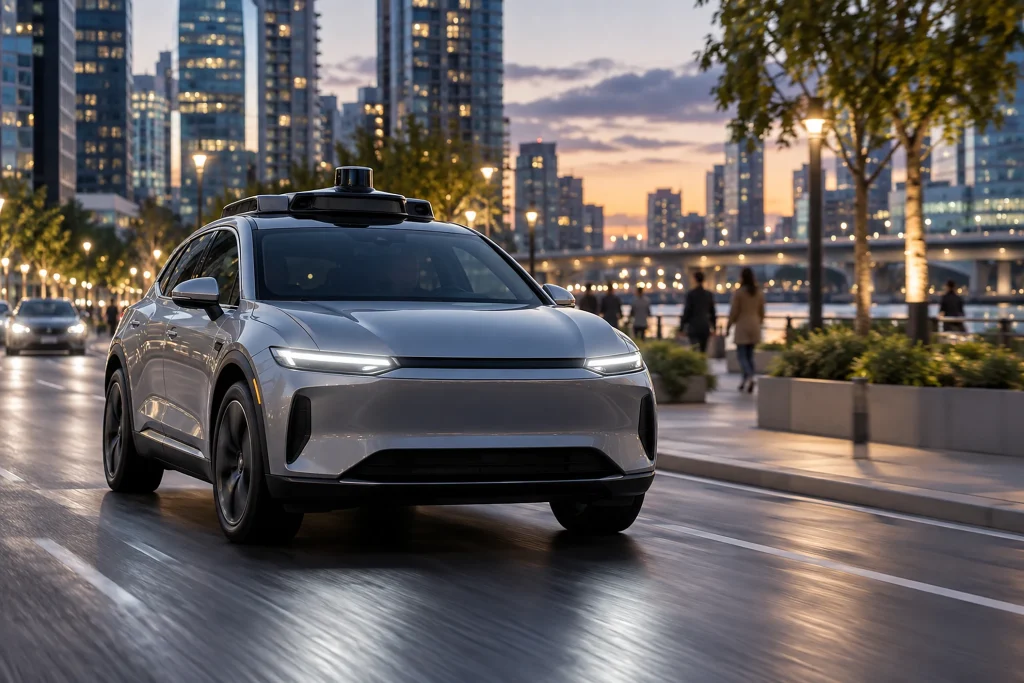
Hyundai has brought the Data Flywheel, which connects data collection, artificial intelligence training, validation and deployment in vehicles in a continuous cycle, into full-capacity operation. At the “HMG Autonomous Driving Media Day” event held at 42dot’s center in Gyeonggi, the strategy, roadmap and Level 2++ were unveiled; the Atria AI-powered SDV navigated urban traffic without intervention. The NVIDIA platform and software will be integrated into the SDV architecture, while sensors from Hyundai, Kia, 42dot and Motional will be standardized on the NVIDIA DRIVE Hyperion 10 platform. Level 2+ vehicles will enter mass production in the first half of 2028 and Level 2++ vehicles in the second half; Atria AI models will enter mass production in the second half of 2029. The system will prioritize rare scenarios, perform 3D validation and operate 24 hours a day. The Level 4 pilot in Gwangju will begin by the end of the year; Pace Car data will be used for Level 2+ and Level 4.
Why it matters
This approach means that sensor, software and data processes across Hyundai, Kia, 42dot and Motional will converge on a shared technical foundation. The continuous data collection and validation cycle will allow data obtained from the Level 4 pilot in Gwangju to also be used in developing vehicles with lower levels of automation. The roadmap therefore concerns not only autonomous driving but also how the software-defined vehicle architecture will be scaled across the group. The NVIDIA integration places hardware and software standardization at the heart of the strategy. The key unanswered question is the extent to which the intervention-free demonstration in urban traffic and the 24-hour validation system can be carried over to the 2028-2029 mass-production schedule.
Background
Data is not a new name in the FikirPilot archive: in the last 90 days, we published 22 articles mentioning this name; the latest was dated September 16, 2026.