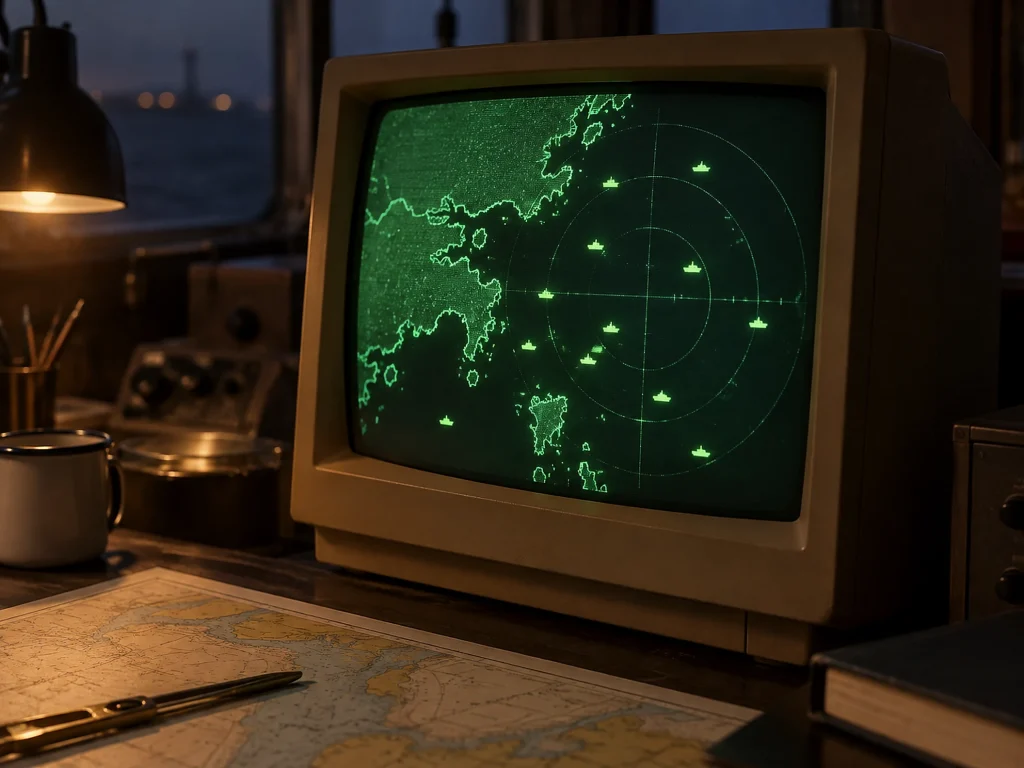
AIS is a maritime radio communication tool that enables ships to identify one another and share their movements and other telemetry data. AIS trackers can be found online; AIS4CBM displays this data on a 40-plus-year-old Commodore 128.
The project uses assembly code to receive data over a serial connection, parse and decode AIS reports, and manage ship data. While BASIC 8’s graphics routines are used to draw ships on the map, a text interface is also provided in BASIC 7.
Requirements:
- 512 KiB REU RAM expansion
- 64 KiB of VDC memory
- SwiftLink-compatible serial interface
The Ultimate-II+ device can meet most of these requirements. Live streaming from the C128 is possible; however, it is not recommended for port managers. It resembles the NES aircraft-tracking project using ADS-B.
Why it matters
AIS4CBM offers an example of an adaptation showing that modern maritime data streams do not necessarily have to be processed only by current computers. The project’s value lies in combining different tasks, such as data reception, decoding, and visualization, within the same system despite the limited resources of an older platform. In this respect, the work is relevant not only to Commodore 128 enthusiasts but also to those interested in low-level software, retrocomputers, and maritime data. However, the fact that it is not recommended for port managers shows that the system should be regarded more as a technical demonstration and hobby project than as operational decision support. Thus, the key question that remains open is whether the live-tracking feature meets the requirements of professional use.
Background
Commodore is not a new name in the FikirPilot archive: over the last 90 days, we published a news story mentioning this name; that article was dated September 6, 2026.