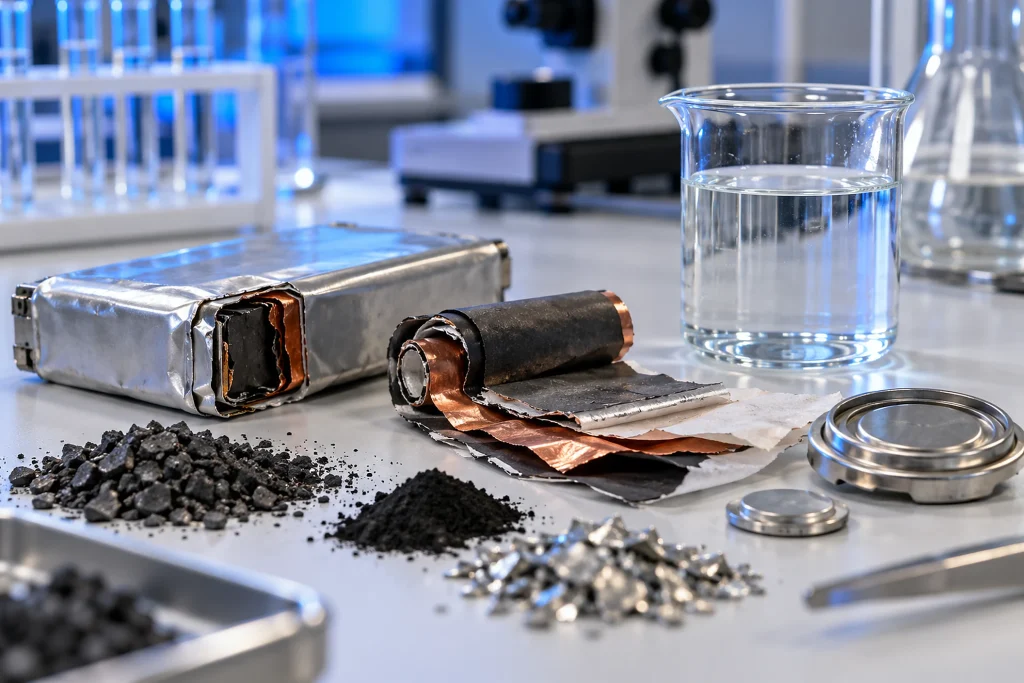
Cornell researchers have developed a method that facilitates the recycling of lithium batteries. In the process called DEER, passive electrode-electrolyte interphase layers that form over time are electrochemically removed using the 1,3-dimethyl-2-imidazolidinone (DMI) solvent. The renewed batteries reach 95% of their original capacities while reducing recycling costs by more than half.
Why it matters
This result makes it possible to assess not only material recovery in lithium battery recycling but also the performance of the renewed cell and the economic burden of the process together. Bringing capacity close to its original level is important in terms of preserving the use value of batteries obtained after recycling. The significant reduction in cost also provides an economic metric alongside technical success in terms of the method’s feasibility. However, the information provided does not explain how the DEER process would perform with different types of batteries, in large-scale facilities, or under long-term usage conditions; the scope of the method and its practical limitations therefore remain unclear.