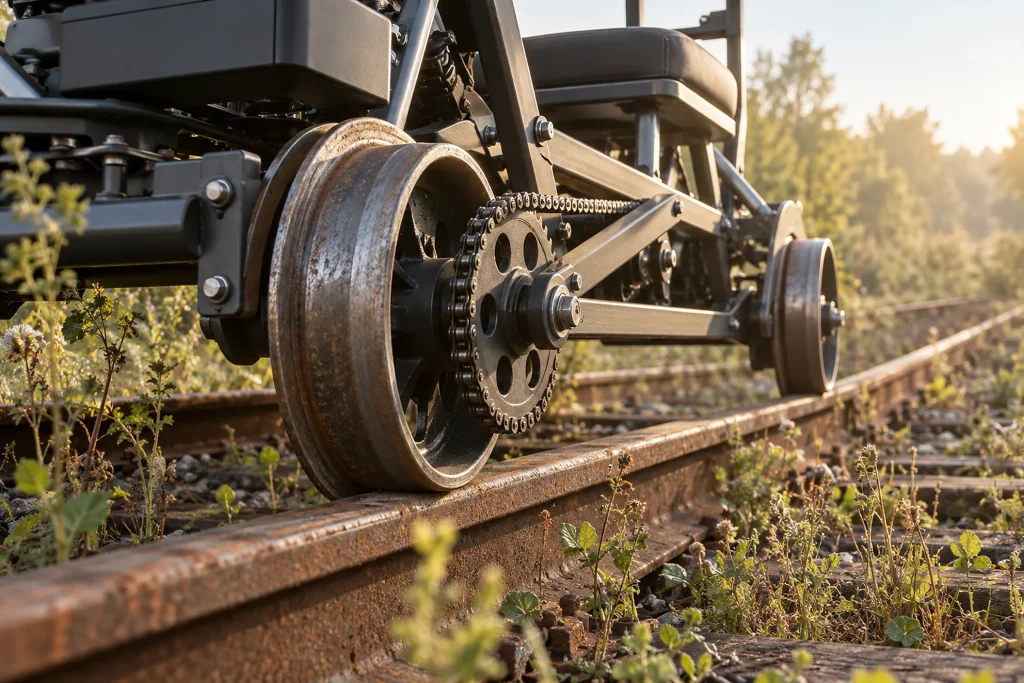
[OneWheel] redesigned its electric vehicle to travel on the unused track behind its offices. The motor was raised by adding CNC-cut mounts to the body, while steel rail wheels purchased from eBay were fitted to a new axle. The motor housing was reduced on a lathe, and power was transferred to the axle using a bicycle sprocket and chain. It was stated that similar vehicles should only be operated on genuinely abandoned tracks or with permission to use the rails.
Why it matters
This project shows that mechanical fabrication, power transmission, and parts procurement must be considered together when adapting an off-the-shelf electric vehicle to different infrastructure. The need for CNC cutting and lathe work demonstrates that the method is a DIY project requiring workshop equipment and technical skills rather than a simple accessory replacement. Presenting the process with technical details and in a reproducible manner provides makers considering similar conversions with a concrete framework for identifying which components need to be redesigned. However, use is limited to unused tracks or lines for which permission has been obtained; therefore, the key unresolved issue is how to verify whether a track is genuinely abandoned and whether permission for its use has been granted.