A New Step in Restoring Brain Cells
Existing methods used to treat Alzheimer’s disease mostly focus on slowing the progression of the disease. The inability of lost neurons to regenerate spontaneously in the adult brain makes reversing brain damage one of the greatest medical challenges. In a new study conducted by researchers at the University of South Carolina, however, support cells in the brain were converted into functional neurons using polymer nanogel technology.
Published in the journal Cell Biomaterials, the study used a nanoparticle-based delivery system called Nano-ERASER. Able to cross the blood-brain barrier, the nanogel targets astrocyte cells, which support neurons and have the potential to transform into new neurons under suitable conditions. Antibody payloads that target and break down the PTBP1 protein, known to suppress cell conversion, enabled astrocytes to transform into new and healthy neurons.
Laboratory Tests and Behavioral Improvement
The effect of the method was first evaluated in cell cultures and 3D organoid systems.
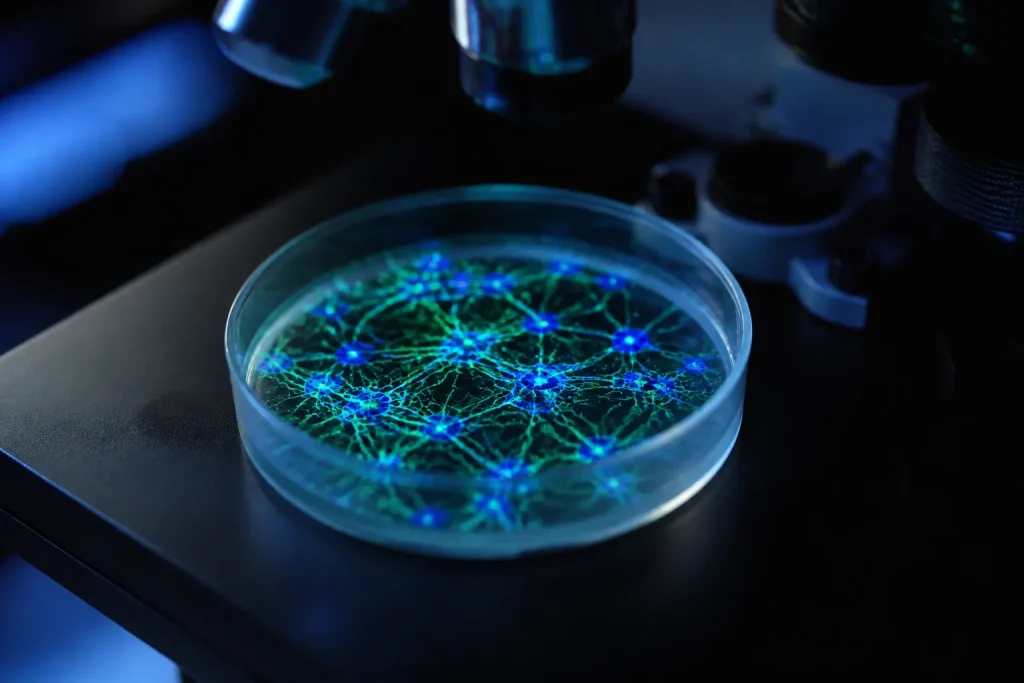
Experiments conducted using miniature brain models created in the laboratory also showed that astrocytes transformed into active neurons after PTBP1 levels decreased. Microelectrode array analyses confirmed that these newly formed neurons fully connected to existing neural networks and transmitted electrical signals like normal neurons.
In the next stage of the experiments, mice with induced Alzheimer’s models received two injections. Following the treatment, the mice were recorded as regaining their nest-building abilities, while in water maze tests they completed complex routes in a shorter time. Examinations determined that neurological inflammation in the brain had decreased and that neuron density had increased markedly.
Preclinical Stage and Future Plans
The scientists who conducted the research state that the resulting neurons were able to remain viable for a long period and successfully reconstruct synaptic structures. However, the method’s long-term effects need to be investigated and validated in primate models before it can move into clinical use in humans. As the next step, the research team plans to begin testing on primates.