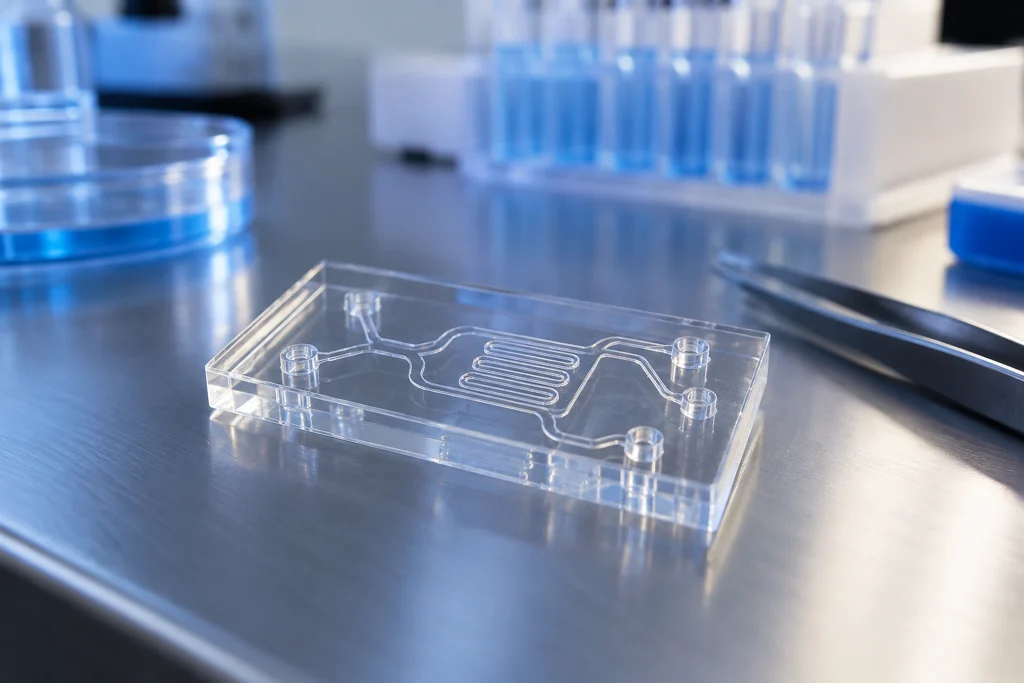
Seventeen years ago, cell biologist Donald Ingber and his team at Harvard University’s Wyss Institute submitted a study to Science that modeled the human lung. Narrow channels in a transparent polymer plate smaller than a USB flash drive contained the cells lining the lung’s air sacs and blood vessels. When air was pumped in, the system rhythmically expanded and contracted, “breathing.” Unlike previous static models, it mimicked lung movements and responded to inflammatory proteins, bacteria and silica nanoparticles in a way similar to living lungs. Movement was also found to affect the absorption of particles by tissues.
The system was shown to be capable of complementing tissue cultures or animal testing in drug and chemical tests, and even of serving as an alternative to them. Science editors rejected the study and requested mouse tests. After conducting the experiments, the team resubmitted the study a year later, in 2010, and got it published; the study was cited in approximately 5,400 papers.
TissUse executive Ilka Maschmeyer reported that a pharmaceutical company had been unable to obtain permission from the FDA to conduct a clinical trial because it had submitted animal data, and that organ-on-a-chip data had been requested. Such alternatives are referred to as NAMs:
- new approach methodologies
- novel alternative methods
- nonanimal methods
Maschmeyer said that use remains rare but is expected to increase. Standardizing NAMs and directly comparing them with animal testing are among the main challenges.
Why it matters
This development moves the question of which data will be accepted by regulatory authorities in drug development beyond laboratory technique and to the center of trial processes. Organ-on-a-chip models have the potential to overcome the limitations of tests conducted solely with static cell cultures when assessing how human tissue responds to movement and environmental effects. For this reason, the issue concerns researchers, pharmaceutical companies and regulators, alongside drug and chemical safety. However, the extent to which NAMs will replace animal testing remains unclear because their use is still limited and the methods face standardization problems. The field’s fundamental question is whether results obtained from different laboratories can become directly comparable with animal data according to common criteria.