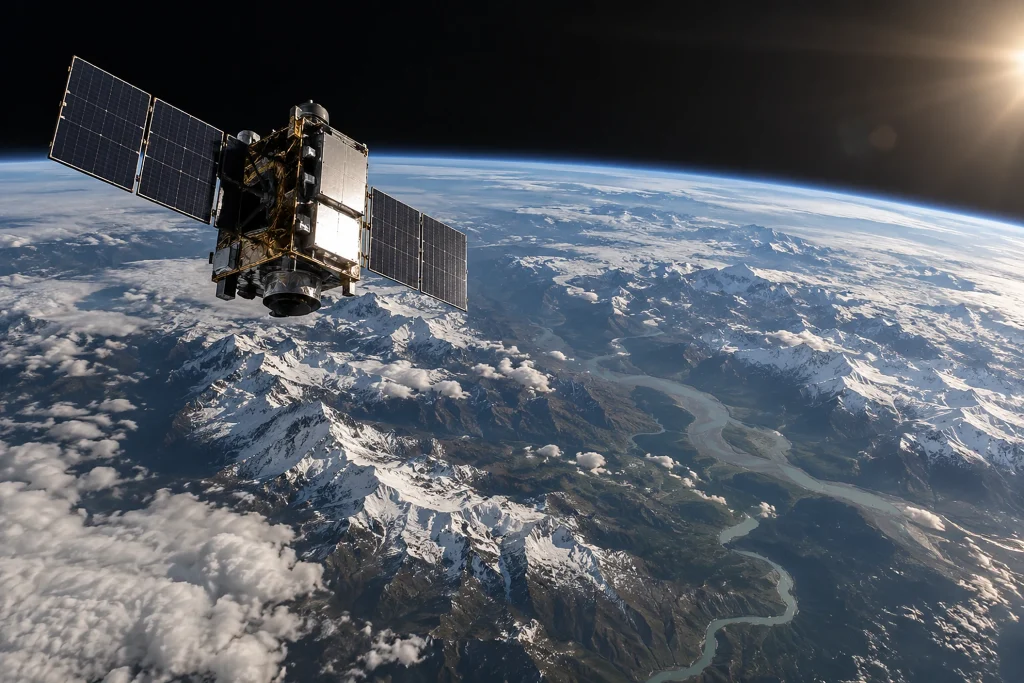
Kyrgyzstan sent a satellite into space for the first time in its history. At a ceremony attended by President Sadır Caparov, the satellite was launched from Vandenberg Space Force Base in California aboard SpaceX’s Falcon 9 rocket. Caparov announced that the launch date was 1 October 2026 and that development of the satellite had begun 2.5 years earlier with a company in the United Arab Emirates.
The satellite, which will be operated from the Control Center in Bishkek, will monitor agricultural land, glaciers, water resources, forests and highland pastures; pollution and illegal resource use will be detectable. Caparov said the country’s 200 thousand square kilometers of territory would be surveyed by satellite over 5-10 years and that monitoring could be conducted for 1.5-2 hours during both the day and night.
Why it matters
This development is creating monitoring infrastructure that will enable Kyrgyzstan to conduct observations of agriculture, water and natural areas from its own control center. Since satellite data could be used to detect environmental pollution and illegal resource use, it will add a new source of information to public institutions’ oversight processes. Monitoring agricultural land, glaciers, forests and highland pastures through the same system could make it possible to assess changes in different areas together. However, the implementation of the announced goals will depend on how frequently the images obtained are used, how the relevant institutions process this data and what administrative steps the findings lead to. Therefore, how the data will be transferred into decision-making processes remains an open question, just as much as the satellite’s technical capacity.