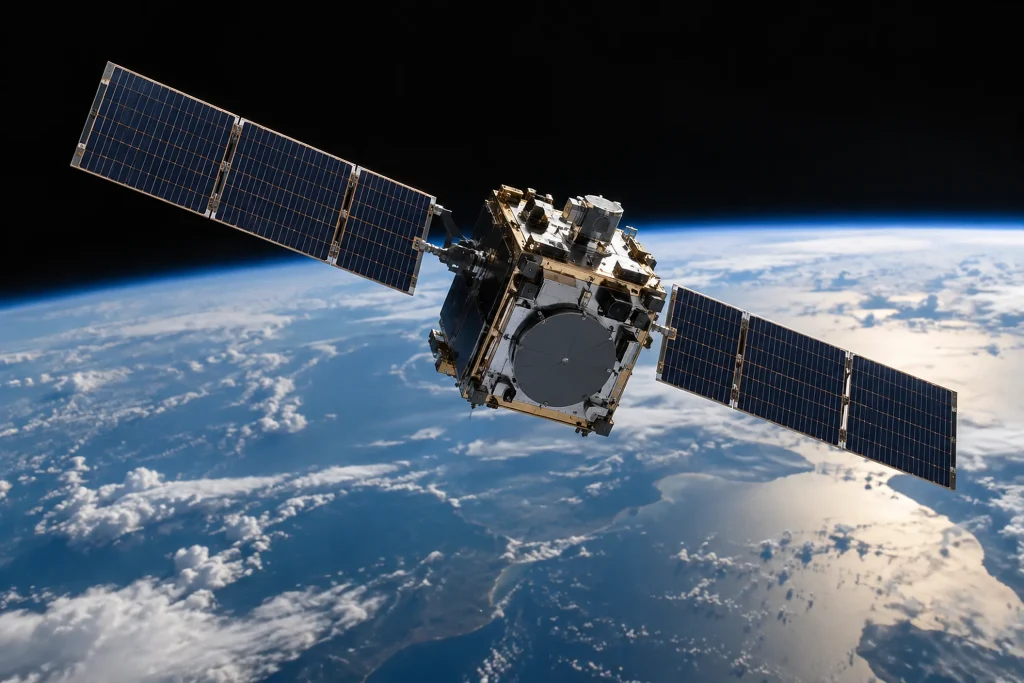
Google is preparing a small data center satellite as part of Project Suncatcher in collaboration with Planet to study the performance of artificial intelligence chips in space. The satellite, named MVP, will be launched on SpaceX’s Falcon 9 rocket on October 1, 2026. It will contain four custom TPUs with power equivalent to a server and will operate on 1 kilowatt of power supplied by solar panels—enough to run a hair dryer. Google aims to answer simple artificial intelligence queries for one year; the satellite will remain in orbit for six years. The chips underwent radiation, vacuum and cosmic ray testing at Crocker Nuclear Laboratory. The system will be restarted in response to errors. James Manyika said that a functional commercial space data center should not be expected in the near future.
Why it matters
The main significance of this initiative is that it will test not only whether artificial intelligence chips can withstand the harsh conditions in space, but also to what extent they can be used with limited power. Tests against radiation, vacuum and cosmic rays will make the technical limits of potential failures in orbit visible, while the restart mechanism brings the question of system reliability to the forefront. The fact that the experiment is limited to simple artificial intelligence queries shows that the idea of data processing in space is not yet being considered at the level of broad-based services. For this reason, the project is less a direct commercial solution than a measurable test of how the hardware behaves in the space environment; the open question is how consistently the chips will perform during their planned operating period.
Background
Google is not a new name in the FikirPilot archive: we have published 52 news articles mentioning the name in the last 90 days; the most recent is dated September 25, 2026.
Term: data center
A data center is a facility where servers are housed alongside cooling systems and uninterrupted power; discussions about the electricity and water consumption of artificial intelligence investments revolve around these facilities.