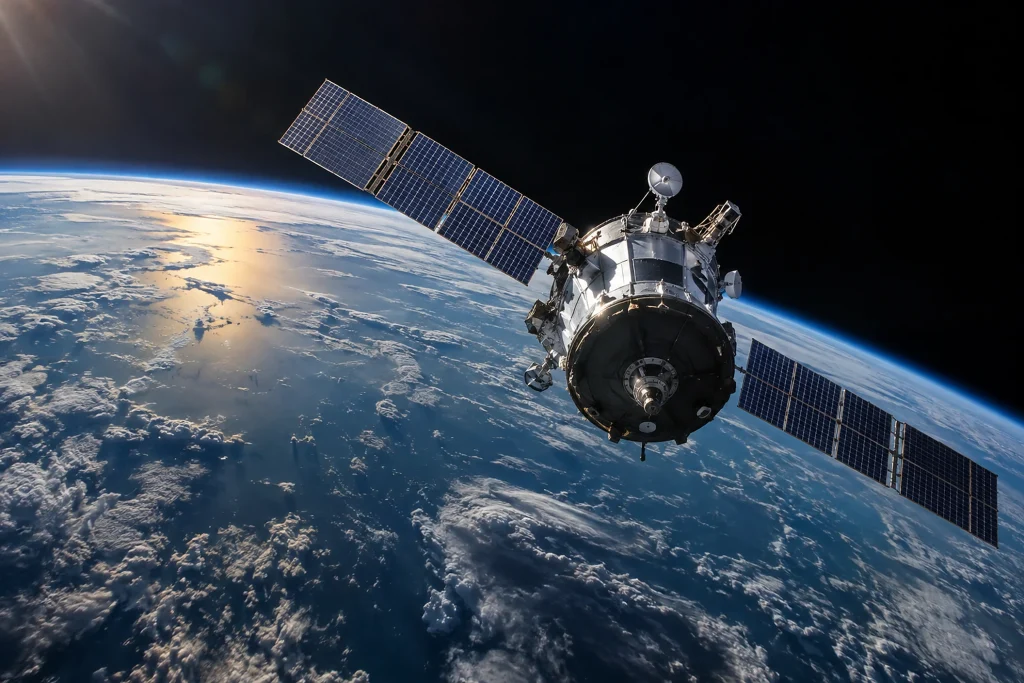
The prototype satellite developed by Google as part of Project Suncatcher, the company’s plan for data centers in orbit, was launched from California on October 1, 2026, aboard a SpaceX rocket. Produced by Planet Labs, the satellite will test whether Google’s Tensor Processing Unit (TPU) chips, which rival Nvidia GPUs, can operate in space. As part of the experiment, the chip is planned to be supplied with one kilowatt of power continuously, cooled and tested with various models.
Once the satellite is operational, it will run the TPU at 15-minute intervals to avoid straining its power and thermal management systems. Following this spacecraft, which is based on Planet Labs’ standard platform, a demonstration mission consisting of two satellites designed for more intensive computing workloads is planned for next year. These satellites are intended to work together through a laser communications link.
The SpaceX rocket is carrying more than 100 payloads, including the Satlyt and Cowboy Space Company missions. What sets Google’s project apart from other space-based AI initiatives is its long-term approach focused on future space infrastructure and AI workloads. The company envisions an orbital data center consisting of 81 satellites flying close to one another and processing tasks in parallel. Google is also a significant investor in SpaceX.
According to Google’s peer-reviewed research, if the learning curve that has delivered annual cost reductions of approximately 20% since SpaceX’s Falcon 1 continues, launch costs could potentially approach $200 per kilogram in 2035. It is calculated that, to reach this target, Starship would need to carry 370,000 tons of payload into orbit and make approximately 1,800 flights over the next 10 years, or 180 flights per year. This calculation is based on carrying 200 metric tons on each mission. Starship has so far never flown more than five times in a year. The research will be published in Joule.
Google’s latest tests showed that the chips could withstand space radiation. Although errors increase, the company believes the chips can handle substantial inference workloads throughout the satellite’s five-year lifespan. While the error rate in typical inference operations is reported to be approximately one in a million, it was noted that large-scale training processes in which thousands of chips would operate for months could pose problems. The report noted that the estimate previously given as 1,600 had been corrected and that the correct number was 1,800.
Why it matters
This initiative shows that AI computing depends not only on chip performance but also on infrastructure conditions such as uninterrupted power in orbit, thermal management and laser communications. Although TPUs’ resistance to radiation represents a positive technical threshold, there is a significant difference in reliability between inference and long-duration training workloads involving thousands of chips. Therefore, the current demonstration will test which failures and operational limits can be managed, rather than proving the sustainability of large workloads throughout the satellite’s five-year lifespan. The project’s large-scale implementation depends not only on the 81 satellites operating together but also on the calculated launch costs and the required launch cadence; Starship’s flight history to date shows that this assumption remains an open question.
Background
Google is not a new name in the FikirPilot archive: we have published 74 reports mentioning the name in the past 90 days; the latest was dated October 2, 2026.
Term: inference
Inference is the process by which a trained model generates a response to a new input; unlike training, it incurs a new cost each time it is used.