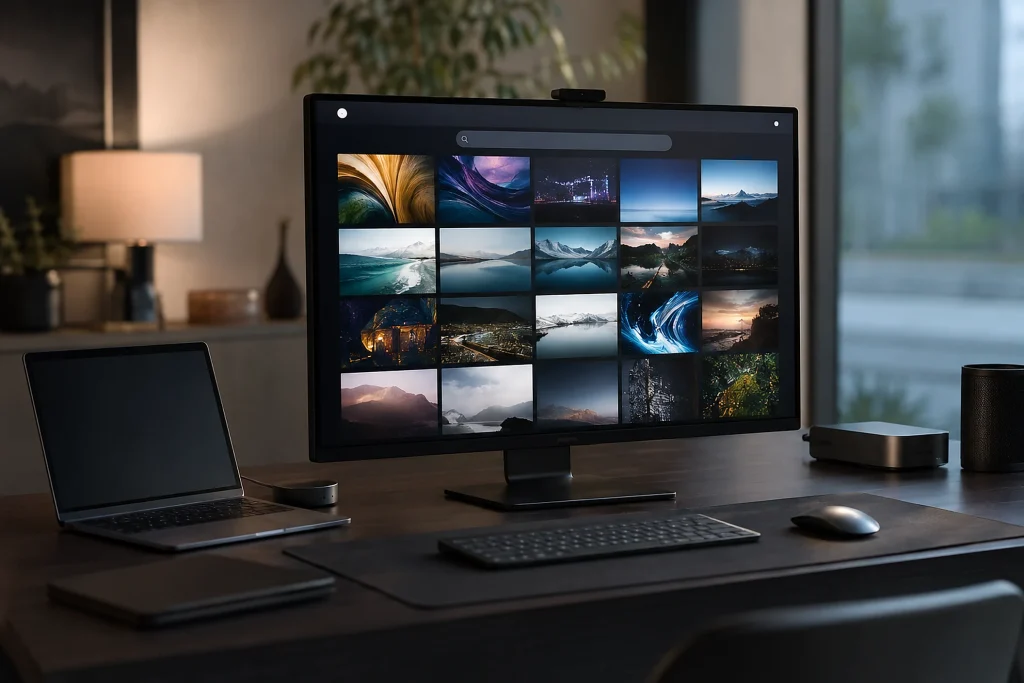
Artificial intelligence is making it easier to create new content while also making it necessary to search across videos, audio recordings, and documents. San Francisco-based Clipto indexes videos, audio files, images, meetings, and other files on computers, allowing users to search in natural language without navigating through folders. Users can also ask ChatGPT, Claude, or other artificial intelligence tools to find files for them.
The company raised 15 million dollars in an all-equity funding round joined by HSG (formerly Sequoia China), GL Ventures, EnvisionX Capital, Palm Drive Capital, Hans Tung, Lu Zhang, and 522 Ventures. The investment brought Clipto’s post-money valuation to 250 million dollars.
Clipto founder Henry Kang has been working on related problems for nearly twenty years. In 2006, while he was a doctoral student at Carnegie Mellon University, Kang worked on robots that recorded their surroundings, recognized objects, and remembered their locations. He later applied this approach to his first startup, which tracked the clothes in a user’s wardrobe and recommended outfits. His second company, Zenvideo, focused on making video production easier and was acquired by Tencent in 2020.
Kang founded Clipto in 2023 with several people from the founding team of his previous startup. Initially, the product was developed for video producers who managed footage across different computers and external drives; however, producers now account for only about a quarter or a third of users. Other users include lawyers, doctors, researchers, marketers, human resources professionals, professors, and students.
Clipto increased its annual recurring revenue to $15 million at the beginning of 2026 and continued to remain profitable on a net income basis. The company has slightly more than 20 employees in the San Francisco Bay Area, Hong Kong, and Singapore.
The company added Model Context Protocol support about two weeks ago. Files indexed without user approval cannot be accessed; operations are carried out on the user’s device, not in the cloud. The new investment will be used for AI models that will run on consumer devices and computing infrastructure, as well as integration with more AI tools.
Why it matters
This development shows that access to information in personal and corporate archives is shifting from folder structures to natural language-based search. The fact that the user profile is not limited to video producers points to a growing need to manage different file types together in fields such as law, healthcare, education, and research. The execution of operations on the device and making access to files subject to user approval are among the fundamental factors determining the conditions of use for those working with sensitive content. Model Context Protocol support, meanwhile, reveals Clipto’s effort to evolve from an independent search tool into a layer through which different AI applications can access files. The open question is the extent to which these integrations will become widespread while preserving user control.
Background
Clipto is not a new name in the FikirPilot archive: we published a news story mentioning the name in the last 90 days; that article is dated September 1, 2026.