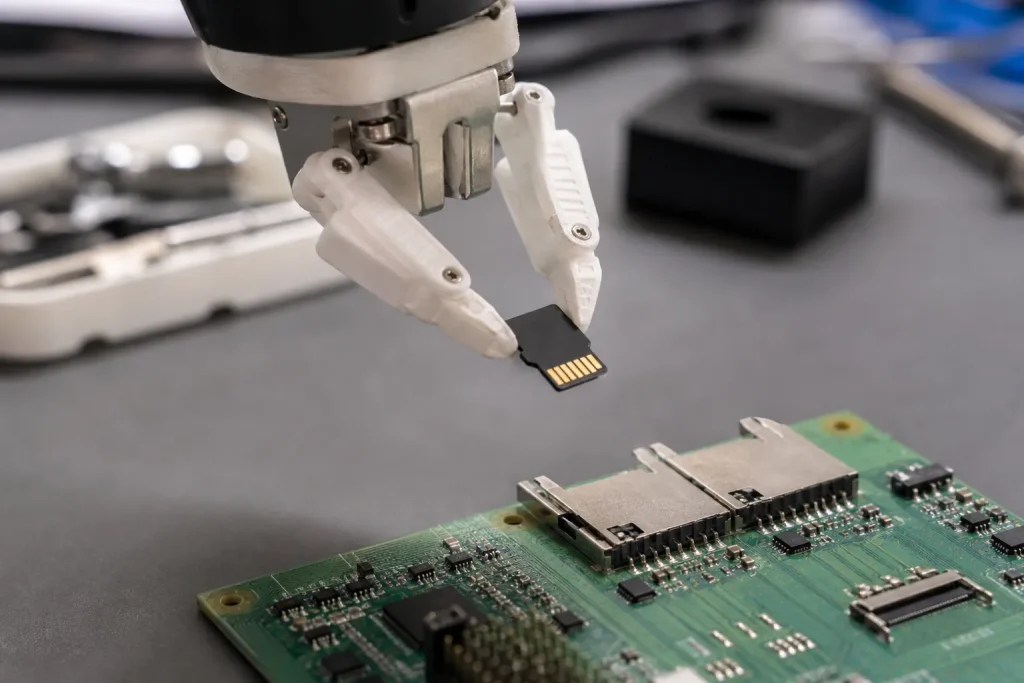
[svofski] developed a small robotic arm that can move existing microSD cards to a reader for evaluation. After the initial design was considered too complex, a structure that moves two grippers with a rack-and-pinion-like mechanism was preferred.
The system, arranged in a T-bot configuration, operates similarly to coreXY kinematics and can select between 12 microSD card slots. Built largely from parts taken from or inspired by 3D printers, the robot was designed out of curiosity about robotic tape changers rather than for a specific use case; it could be used by those who need to copy numerous SD cards or removable media.
Why it matters
The project shows that, for people working with numerous removable media, operations requiring individual access to cards can be mechanically organized. The use of off-the-shelf and 3D printer-derived parts indicates that the design can be built with accessible components rather than through custom manufacturing. However, the fact that the system was not designed for a specific use case leaves open how practical it would be in everyday workflows. Its ability to select between 12 slots shows that the structure differs from a simple setup that moves only a single card, while its real value lies somewhere between a robotic experiment driven by curiosity and a practical media management tool.