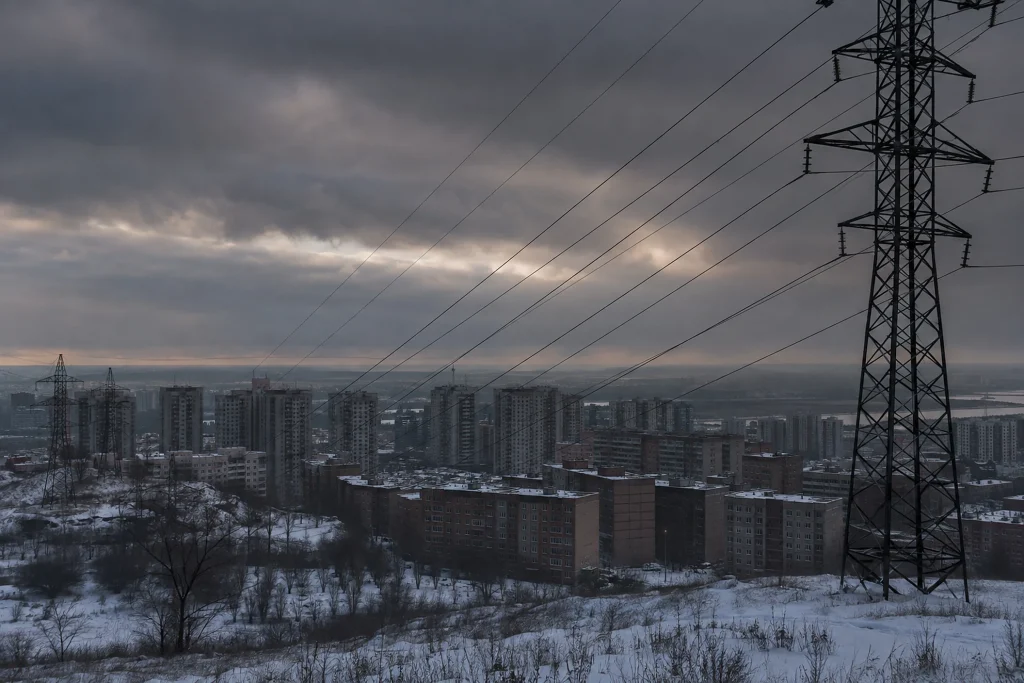
Ukraine’s President Volodimir Zelenski’s defense technology adviser, Serhii Beskrestnov, said the war with Russia had turned into a “war of cities” in which infrastructure was being targeted rather than territorial gains being pursued. Speaking to the Guardian, Beskrestnov warned that Russia could use its stockpiles of ballistic missiles and drones to repeatedly attack Kiev’s electricity, water and heating systems this winter. The 51-year-old adviser called for evacuation options to be considered to protect vulnerable civilians if the capital’s energy system collapsed, saying two to three million people could be affected. Beskrestnov said Ukraine had set a target of increasing its drone attacks from 300 a day to a thousand, adding that Russia’s civil aviation could also be disrupted. He argued that the economies and infrastructure of both countries would suffer damage. US representatives Steve Witkoff and Jared Kushner traveled to Kiev to meet with Zelenski. According to the UN, 437 civilians were killed and 2 thousand 610 people were injured in Ukraine in July.
Why it matters
This framework creates a risk area that extends the impact of the war beyond the front line and ties it to millions of people’s access to essential daily services. The possibility of electricity, water and heating being cut off makes civilian protection and potential evacuation preparations a central issue beyond military targets, while the UN figures for July show that this pressure already carries a heavy humanitarian cost. Ukraine’s goal of increasing its attack capacity and the assessment that Russia’s civil aviation could be affected indicate that reciprocal escalation could broaden the economic and social consequences. Although the US contacts in Kiev show that security concerns are being addressed alongside diplomatic talks, the question of which protection and evacuation plans will be implemented for the capital’s infrastructure remains open.