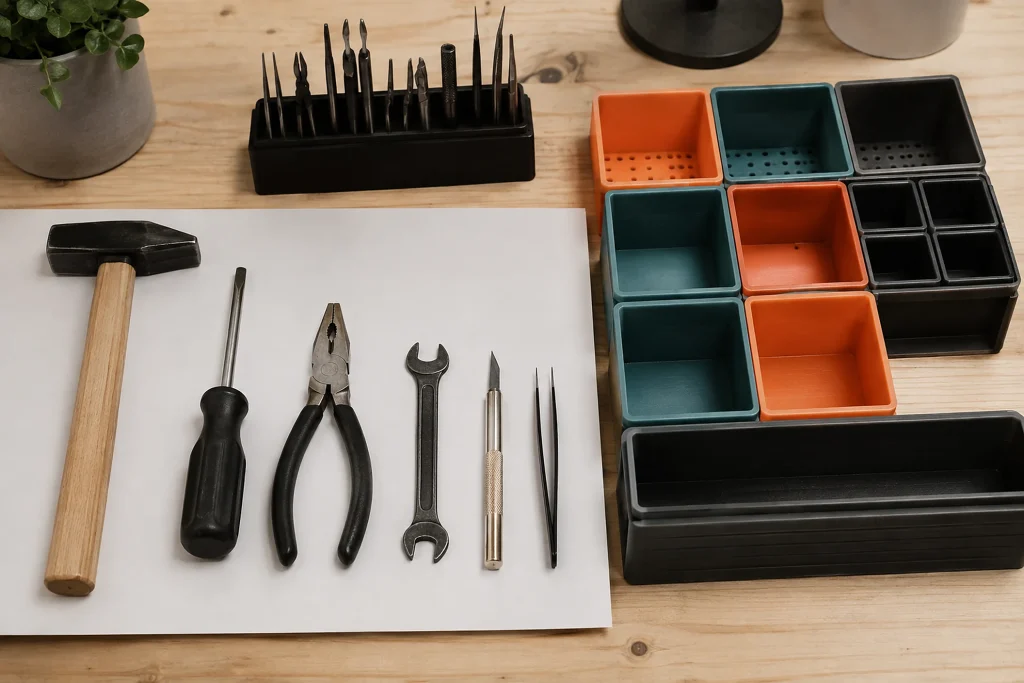
Tracefinity creates custom Gridfinity boxes and layouts by extracting the outlines of tools from photos. Users place their tools on paper and photograph them; the system traces these outlines, saves them to a custom library, and later allows users to prepare project-based layouts.
The system offers features such as design settings and optional magnet holes. Using machine learning, Tracefinity runs by default with a local, CPU-friendly model and can be fully self-hosted. For more complex shapes or low-quality photos, a Google Gemini API key can also be used optionally.
Why it matters
Tracefinity offers an approach for users who want to organize their tools that shapes box design around their personal equipment rather than limiting it to ready-made options. The photo-based process makes it possible to prepare separate layouts for different tool sets and keep them in the library for later reuse. Its ability to run locally and be self-hosted provides an option that reduces the need to rely on external services while using the system; however, it remains unclear how this choice will affect results with complex shapes or low-quality photos. Optional Gemini use provides an alternative for these situations, but users may have to choose between accuracy and their preference for local operation.