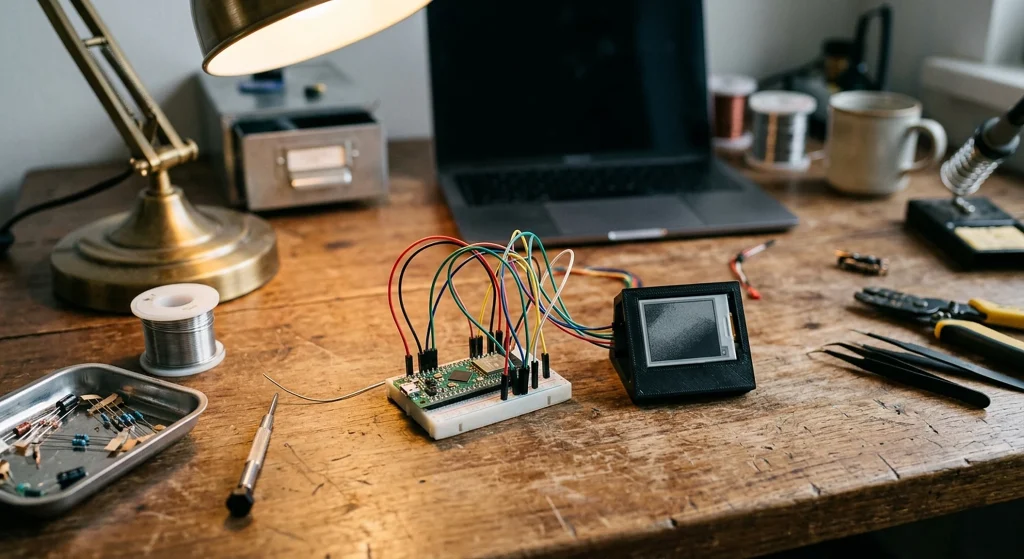
Meta has announced a new project that opens up Muse, its personal AI agent that can book travel, fill out forms, and shop on behalf of users, to developers. Introduced on Friday, Muse Gadgets is an open-source initiative that allows developers to build their own hardware that connects to Muse. The company offers open-source firmware along with a Linux software development kit (SDK).
Users can connect Muse to displays, buttons, sensors, and similar components using low-cost hobby computers such as Raspberry Pi or off-the-shelf ESP32 boards. Meta’s suggested starter projects include:
- Adding a color e-ink display to Muse
- Loading Muse onto a stick that plugs into a TV’s HDMI input
The company has also opened a Discord channel to support users.
Meta has tried the code itself, too. Nat Friedman, product chief at Meta Superintelligence Labs, introduced a device called Muse Home Link in a post on X. The USB-C-powered device allows Muse to connect to the home network and communicate with devices such as speakers and smart TVs.
The project is part of Meta’s strategy to take Muse beyond a standalone chatbot. Earlier this week, the company announced Muse for Small Business, which is free with usage limits; this version connects Muse to the following tools:
- Shopify
- Dropbox
- Slack
Meta has also established a new unit called Meta Enterprise Platform to deliver its AI products to businesses and enterprise customers.
Why it matters
This announcement can be read as a concrete step in Meta’s strategy of taking its AI assistant out of the chat window and embedding it into everyday objects and business processes. With open-source firmware and a Linux SDK, Muse is opening up to low-cost hobby boards, lowering the cost barrier to hardware development and creating a new space for independent developers and hobbyists. The fact that the company’s own Home Link device was promoted at the chief product officer level shows that the project is being treated as a corporate priority rather than an experimental side effort. Taken together with the small business version and the Meta Enterprise Platform unit announced the same week, it is clear that the company is trying to build a Muse-centered ecosystem on both the consumer and enterprise fronts. The open question, however, is the extent to which the developer community will respond to this call and how Meta will generate revenue from its open hardware model.
Background
Meta is not a new name in the FikirPilot archive: we have published 39 stories mentioning this name in the last 90 days; the most recent is dated 4 October 2026.
Term: open source
Open source means that a software’s source code is publicly available and that its license permits inspection, modification, and redistribution; it is not the same thing as being free of charge.