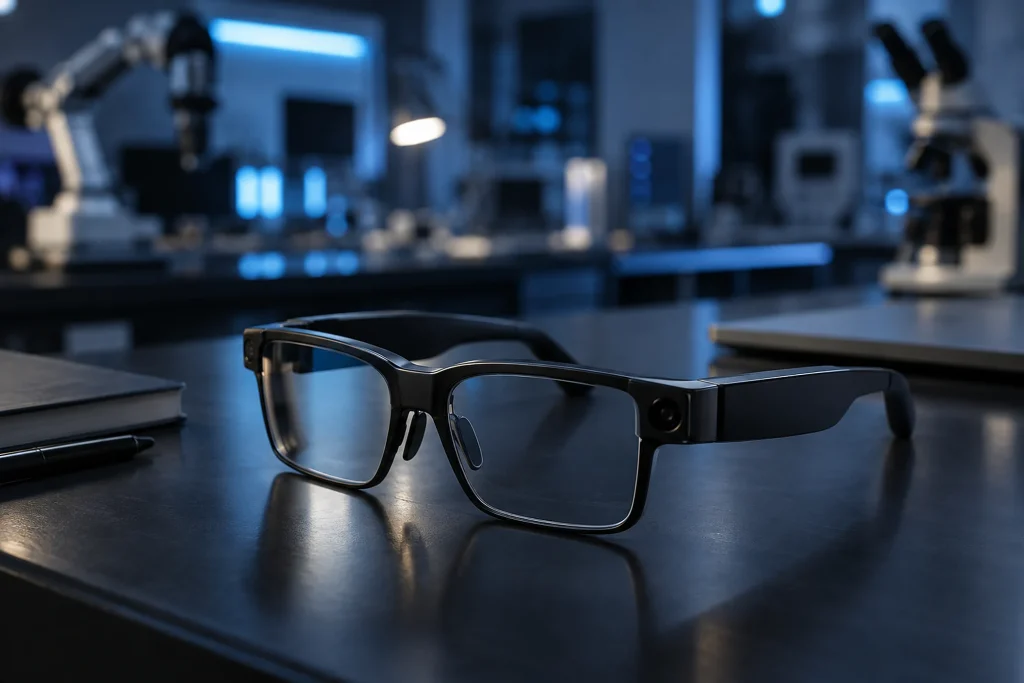
PrismML announced that it had run Bonsai, a 1-bit vision-language model with approximately two billion parameters, on smart glasses powered by Snapdragon AR1 Gen 1. As part of the demo, image and text data were processed on the device, while no new consumer product was introduced.
Bonsai has 1.7 billion language parameters and 300 million parameters in its vision component. According to the company, the model weights occupy 0.43 GB; in the 4-bit version, this figure is 1.66 GB. In the performance test, Bonsai generated 15.36 tokens per second, while the comparison model generated 7.44 tokens. PrismML stated that the results were based on its own tests and that real-world performance could vary depending on the task, runtime, camera, battery and thermal conditions.
Why it matters
This demonstration provides a technical example showing that AI tasks such as image and text processing can be performed on smart glasses hardware without requiring a cloud connection. The model weights taking up less space and the higher speed measured compared with the comparison model are directly relevant for devices with limited memory and processing power. This is particularly relevant to those interested in response times, data processing methods and the use of hardware resources in smart glasses. However, because the measurements are based on the company’s own tests, it remains unclear whether the same results can be achieved across different tasks and under different camera, battery, thermal and runtime conditions. In addition, since there is no new consumer product, it is still uncertain how the demonstration would translate into everyday use.
Background
PrismML is not a new name in the FikirPilot archive: we published a report mentioning the name in the past 90 days; that article is dated September 20, 2026.