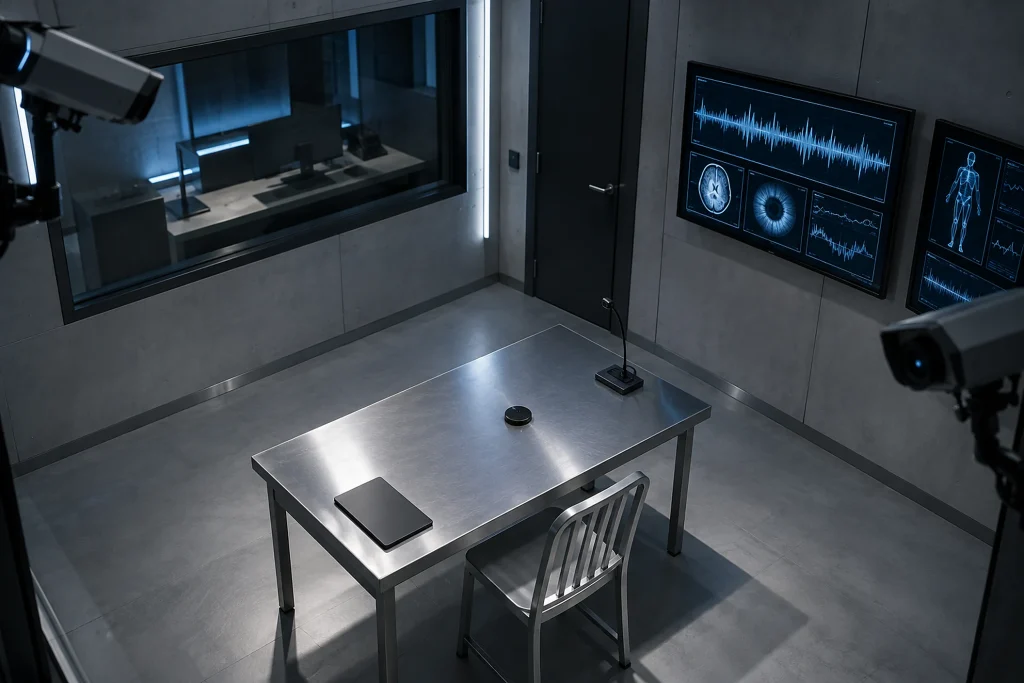
The US government wants to spend $30.3 million over the next five years on an enhanced lie detector, according to the Department of Defense budget request. The program, called Polygraph+ or Polygraph Next, will focus on scoring algorithms that use artificial intelligence and machine learning, as well as “standoff sensing,” a technique that enables physiological measurements without attaching a device to a person. The project aims to modernize federal polygraph and credibility assessment technologies; however, Northumbria University law expert Kyri Kotsoglou criticized the initiative.
The program came to light as the Pentagon turned to polygraphs more frequently during Pete Hegseth’s tenure to find the source of leaks to the press. In September, the New York Times reported that approximately 50 officers at the Joint Staff had been tested following reports that US weapons stocks were declining because of the war with Iran.
Polygraph+ will be carried out by the Defense Counterintelligence and Security Agency, which conducts background investigations for the federal government. According to the budget document, which has not yet been approved by Congress, the technology will be used to assess job applicants and for “insider threat detection.” Details remain unclear; DCSA did not respond to a request for information.
In 2023, DIU solicited applications for products that could be used in deception detection and selected two companies:
- Presage Technologies: Says it measures heart and respiratory rates with standard cameras.
- Altec Research: Developed a prototype that monitors head movement, facial skin temperature and pore activity.
While existing evidence for polygraphs is considered weak, people can detect lies “just over half the time” without technical assistance.
Why it matters
The initiative aims to change the current approach to how measurements related to human behavior are used in security investigations and insider threat assessments. Its focus on collecting data without physical contact and on algorithmic scoring raises the possibility that assessments could be applied across a broader range of settings, which could have implications particularly for recruits and public employees under investigation. However, the polygraph’s limited reliability in detecting deception shows that making new methods merely more technologically advanced may not be enough to solve the accuracy problem. Whether the budget will secure congressional approval, which measurements will be used, and how the algorithms will be overseen to prevent erroneous assessments remain key open questions.
Background
The Pentagon is not a new name in the FikirPilot archive: we have published 5 reports mentioning it in the last 90 days; the latest is dated September 30, 2026.