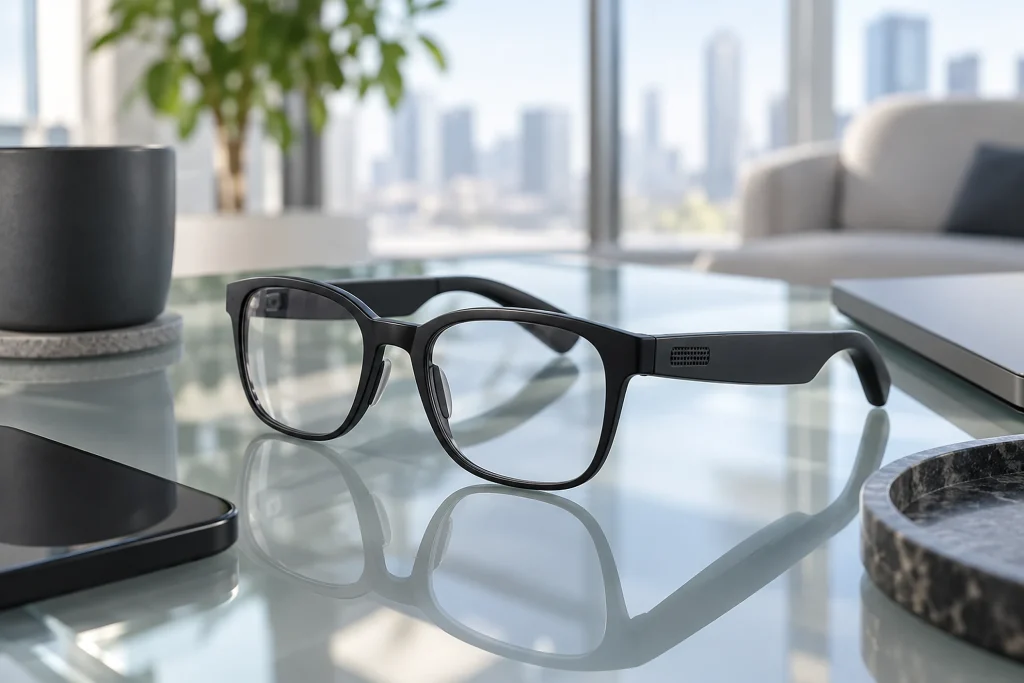
At the Meta Connect event, the company’s smart glasses stood out due to their extensive use by Meta employees and influencers. Most of the demos at the event focused on the glasses. The products introduced by Meta also included a new, voice-only model that has not yet been put on sale.
The glasses, which have six microphones, do not include a camera or a built-in feature for recording their surroundings. For this reason, the model is expected to reduce privacy concerns associated with camera-equipped glasses. The glasses were said to be lighter and more comfortable than other smart glasses. Users can listen to music and make calls with this product without reaching for their phones.
The glasses will also be integrated with Meta’s personal agent system, Muse. Through the feature, which has not yet been made available to the public, users will be able to give Muse voice commands. Meta also plans to allow users to choose from digital avatars that will represent the agent. The trial showed that users had to speak directly to the agent for it to carry out commands, and that the system could become confused when they were speaking with someone else at the same time. Muse is intended to perform various digital tasks in addition to sending emails, reading to-do lists and answering questions.
Meta also showcased another glasses model with audio-only features for users experiencing hearing loss. An official from the company’s research team said the product had been in development for approximately five years. While it was stated that some degree of hearing loss affects about 50 million Americans, the glasses were reported to be priced at $150. This price is lower than the $1,600 level seen with some hearing aids. In the trial, the glasses were found to amplify the voice of the person speaking. Users can switch between the “focused” option, which focuses on the person in front of them, and the “omnidirectional” option, which picks up all sounds in the surrounding area.
Mark Zuckerberg had previously said that he viewed smart glasses as the technology of the future. Meta’s goal is to stand out in this field, which has yet to establish its position, by making the glasses stylish, functional and useful.
Why it matters
This development shows that smart glasses are being positioned not only as devices that capture images, but also as assistive technologies differentiated according to the needs of different users. While the camera-free option is relevant to users who do not want to record their surroundings or who have privacy concerns in environments where such devices are present, the amplification feature creates a separate use case for people experiencing hearing loss. The Muse connection, meanwhile, raises the issue of voice commands being understood accurately and tasks being completed reliably, rather than simply highlighting the glasses’ potential to reduce the need for phone interactions. The fact that the products have not yet gone on sale and that Muse has not been made available to the public leaves open the question of how useful these features will be in everyday use.
Background
Meta is not a new name in the FikirPilot archive: in the last 90 days, we have published 32 news stories mentioning this name; the most recent is dated October 3, 2026.
Term: agent
An artificial intelligence agent is software that calls tools and carries out multistep tasks to achieve a goal, rather than producing a single response.