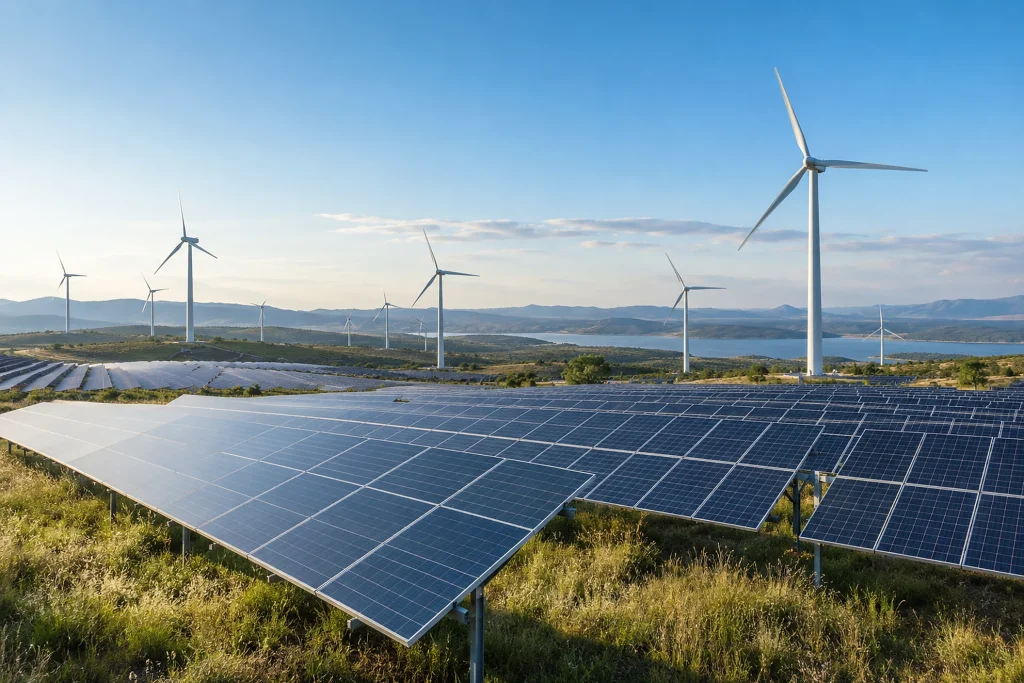
The WNISR 2026 report was prepared under the coordination of French nuclear energy consultant Mycle Schneider. Wind surpassed nuclear for the first time in monthly generation in March 2025, and solar did so in April 2025. From March 2025 to June 2026, one of them surpassed nuclear every month; from March to May 2026, both did.
- In 2025, solar capacity increased by 510 GW to 2,383 GW (27%), while wind capacity increased by 159 GW to 1,291 GW.
- Nuclear capacity increased by 1.5 GW to 399.5 GW, while operating capacity fell by 0.5 GW to 368.6 GW.
Nuclear generation rose by 1.1% to 2,703 TWh; it increased by 7.6% in China but fell by 0.2% in other countries, dropping below 2006 levels. Its share reached a 45-year low at 8.8%; the peak in 1996 was 17.5%.
Why it matters
The data indicate that the center of gravity in global electricity generation is shifting not only in terms of new capacity but also in terms of monthly generation performance. This picture requires those making energy policies and planning electricity systems to assess operating continuity and operating capacity as well as the scale of resources. The decline in nuclear operating capacity alongside the increase in solar and wind capacity makes it important to monitor the gap between installed capacity and actual generation. The fact that nuclear generation is increasing in China while declining in other countries shows that the shift is not distributed evenly on a global scale. The key question left open by the report is how permanent the monthly generation lead will prove to be in terms of annual totals and energy balances in different countries.