The starting point in living organisms
Researchers at Osaka University have developed a new method that combines artificial intelligence with electrical signals to detect traces of extraterrestrial life. Equipment searching for life in space must be both sensitive and small. The method focuses on the forms of amino acids, which are considered a biosignature of life: while amino acids in living organisms are almost entirely in the L-form, inanimate processes produce the L and D forms in similar amounts.
Takahito Oshiro’s figures
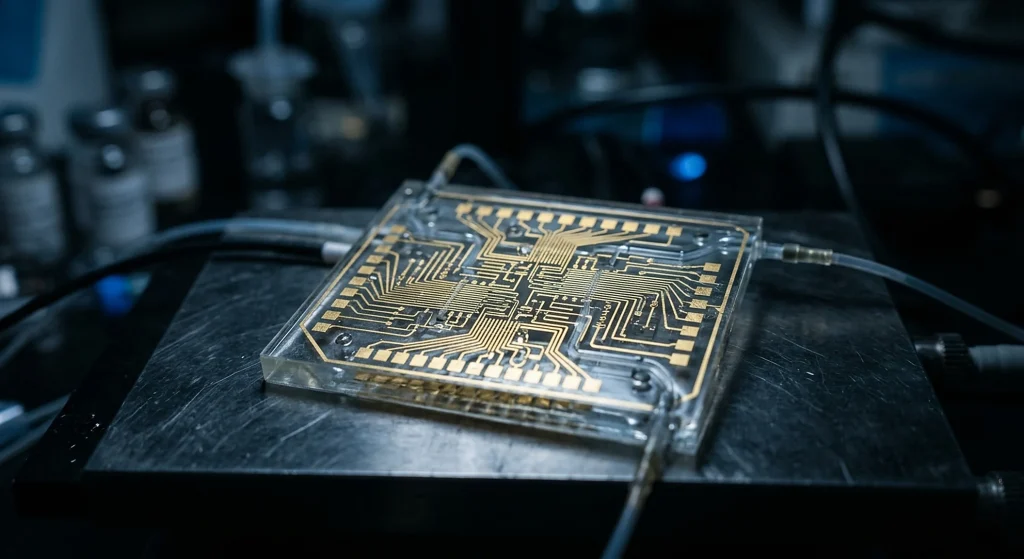
The scientists took measurements by passing molecules through a gap between two thin gold wires; the waveforms of the current flowing through the wires change depending on the type of amino acid. The paper’s lead author, Takahito Oshiro, explained that by combining the nanogap technique with artificial intelligence, they were able to distinguish the L and D forms with over 80 percent accuracy. This marks the first time the chirality of amino acids has been distinguished at the single-molecule level.
Australia’s Murchison data
The method was tested with the Murchison meteorite in Australia and soil from the Atacama Desert in Chile, producing results similar to those of conventional techniques. It is hoped that the method, which is simpler, less affected by vibration, and requires no chemical reagents, could be used in small devices that could be sent to other planets. The study was published in Nature Communications.