The course of MNPs
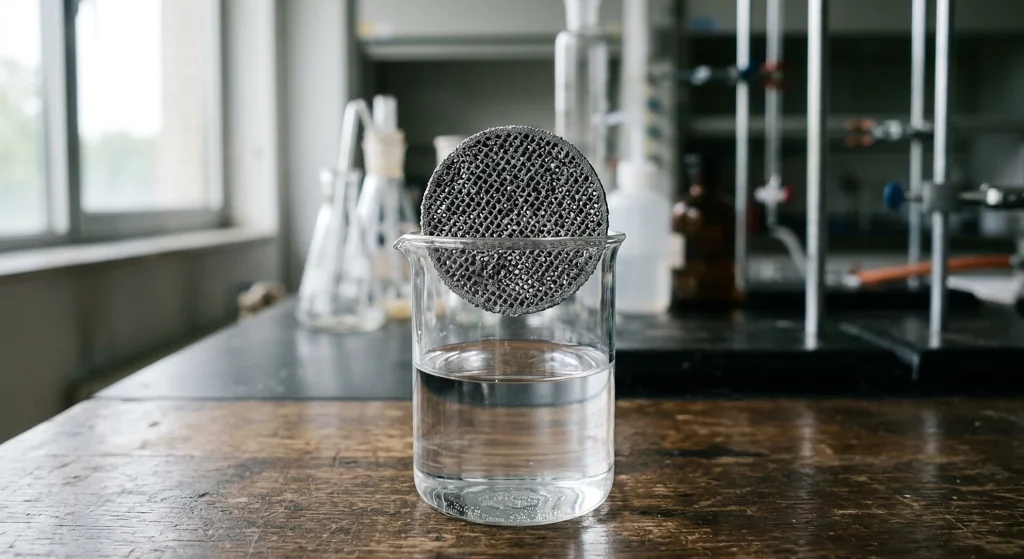
As synthetic polymers become more widespread, micro- and nanoplastics (MNPs) in the environment are also increasing; since they do not break down easily, filtration is important for keeping them out of drinking water. A study by Ethan A. Crawford and his team, published in the journal Separation and Purification Technology, presents a prototype that filters up to 90% of MNPs using a low-cost, 3D-printed filter mesh.
PLA by the numbers
In the multilayer system printed with PLA, polyethylene glycol (PEG) is used as a sacrificial additive. Since fine pores cannot be formed with FDM printing, the PEG spheres inside the filter are dissolved with 80°C hot water to obtain a porous surface. The PLA-PEG10 sample showed the best structure; 90% efficiency was achieved with 20 layers, but improving the system and its reusability remain to be investigated.