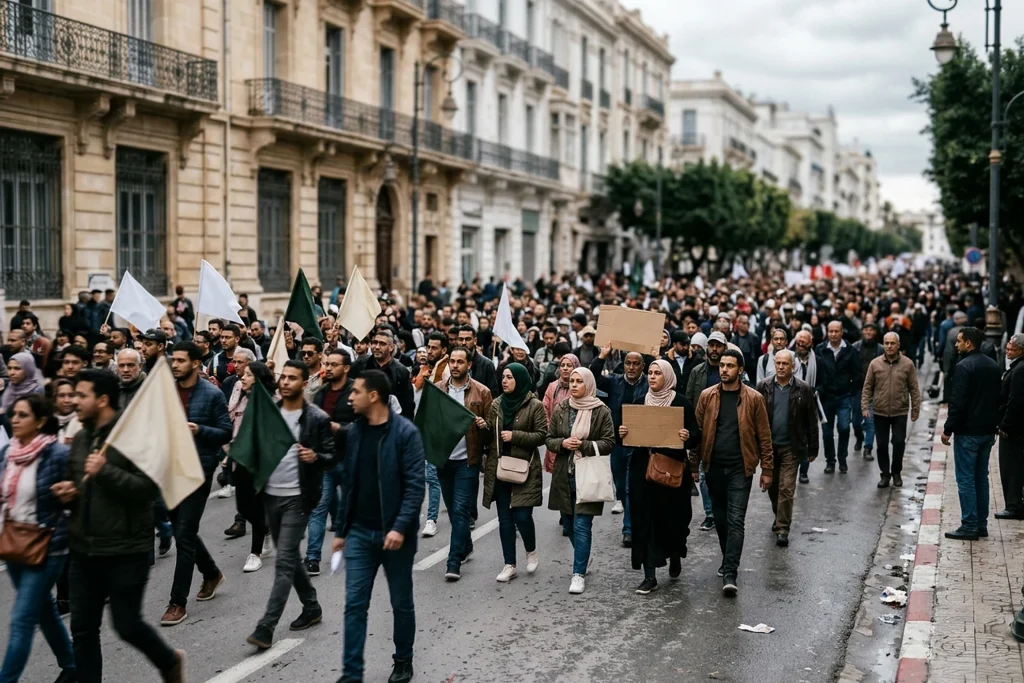
Tunisia’s streets are speaking out once again, and the question of whether the anger of 2011 is returning is being brought back onto the agenda by the march on Habib Burgiba Avenue in the capital on Saturday, October 17. Thousands of people marched there. Participants voiced demands for jobs and freedom against President Kays Said, while slogans from the days that led to the ouster of Zeynel Abidin Bin Ali in 2011 were heard once more. The struggle to make ends meet came to the fore. The narrowing space for expression was the other topic of debate. In the procession, trade unionists and lawyers marched side by side. Journalists and unemployed young people were also there.
The popular movement in the country, which began when Muhammed Buazizi set himself on fire on December 17, 2010, ended with Bin Ali leaving the country on January 14, 2011. The popular movement came to an end. In the years that followed, pluralist elections were held and a new constitution was adopted. Unemployment and regional inequality went unresolved. Trust in democratic institutions was also eroded.
Said, who rose to prominence in 2019 as a jurist distant from the traditional parties, suspended the work of parliament on July 25, 2021, gathering powers in the presidency. Powers were concentrated in the presidency. While his supporters counted this as a step to repair the gridlocked administration, his opponents assessed the same move as interference in the independence of institutions.
Said received 90.69% of the vote in the 2024 presidential election, but turnout stood at just 28.8%. The administration argues that it is enforcing the law. In the country, the prosecution of journalists and the detention of opposition politicians are a matter of debate, while rights organizations note that critical voices remain under pressure. Salaries are stagnant. On the economic front, food spending is rising every month.
Why it matters
The October 17 march gains meaning when read alongside the 2024 election picture: set against Said’s 90.69% share of the vote, turnout of 28.8% lays bare the gulf between official support and social legitimacy, and shows that the opposition has moved beyond the ballot box and is reorganizing in the streets. The gathering of trade unionists, lawyers, journalists, and unemployed young people in the same procession points to the formation of a broad front around the unemployment and regional inequality that have remained unresolved since 2011. The emergence of participation on this scale in an environment where prosecutions of journalists and the detention of opposition figures continue also tests the extent to which the climate of repression can hold back social mobilization. The development leaves open the question of whether street pressure in Tunisia, where the struggle to make ends meet and the narrowing of space for expression are intertwined, will force the administration into a change of policy.