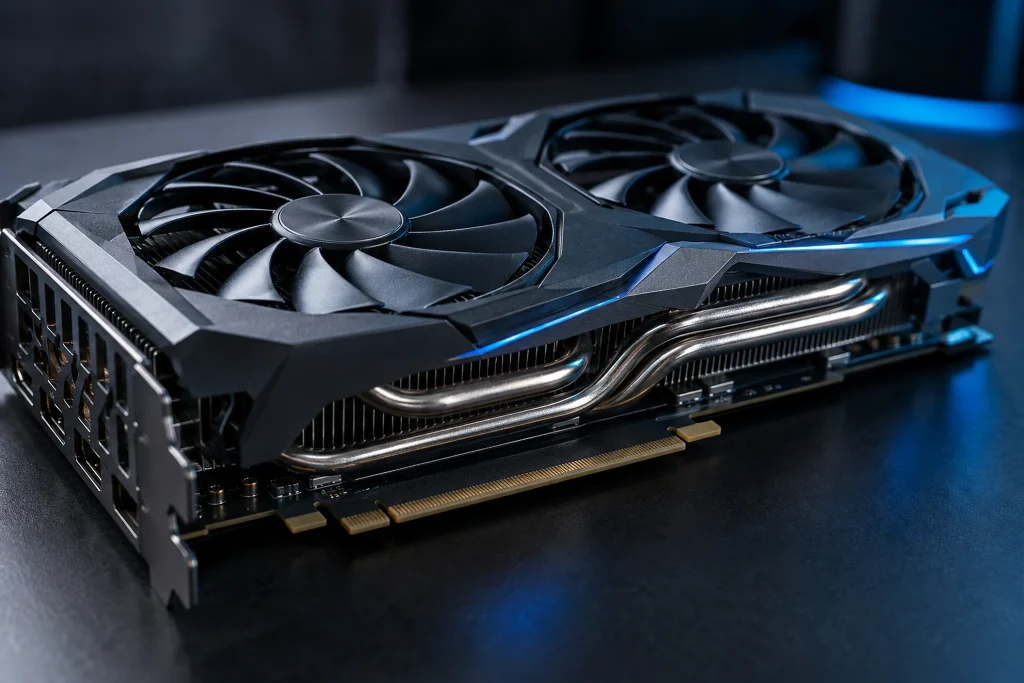
A new leak claimed that NVIDIA will release its GeForce RTX 60 series in the first half of 2027 and use a design for the RTX 6090 that differs from its flagship models. This would mean the series arrives about two years after the Blackwell-based RTX 50 models. Citing an anonymous NVIDIA source, the report argued that Gaming Rubin had been postponed from 2026 to 2027 to allocate capacity to data center products, that the plan was approved months ago, and that rumors of a 2028 release were false. Another hardware source disputed the date. Neither side provided evidence, while NVIDIA has not confirmed the products or the timeline. The company introduced Rubin for data centers and artificial intelligence in January 2026. The specifications announced in July—336 billion transistors, 224 SM, and HBM4—were not linked to any GeForce model.
Why it matters
The leak’s main impact is that it raises the question of how NVIDIA prioritizes data center and artificial intelligence products over GeForce graphics cards amid limited production capacity. For users planning an upgrade after the RTX 50, the issue therefore concerns not only the specifications of a new model but also the refresh cycle for consumer products. However, the two sources’ conflicting claims about the date and their failure to provide any evidence mean the 2027 timeline is not reliable enough to inform decisions. The fact that the technical specifications announced for Rubin were not linked to any GeForce model also prevents direct conclusions from being drawn about the RTX 6090’s design or performance. The key unresolved points are whether the potential delay is actually due to capacity allocation and which design the desktop flagship will use.
Background
NVIDIA is not a new name in the FikirPilot archive: in the last 90 days, we published 8 news stories mentioning the company; the most recent was dated September 6, 2026.
Term: data center
A data center is a facility that houses servers along with cooling and an uninterrupted power supply; the debate over the electricity and water consumption of artificial intelligence investments centers on these facilities.