The difference between e-CVT and CVT emerges when researching automatic transmissions, where these two terms describe mechanically different systems. Their names are similar, their structures are different.
CVT is the abbreviation of “Continuously Variable Transmission.” This term means a continuously variable ratio transmission, and instead of fixed gear steps, it uses two variable-diameter pulleys with a metal belt or chain running between them. As the pulley diameter changes, the transmission ratio changes as well. This allows the engine to be kept within its efficient rev range. Low revs can be selected in calm driving, and high revs during strong acceleration. When the throttle is pressed hard, no distinct gear change is felt, but some manufacturers create virtual gear steps through software to reduce this sensation.
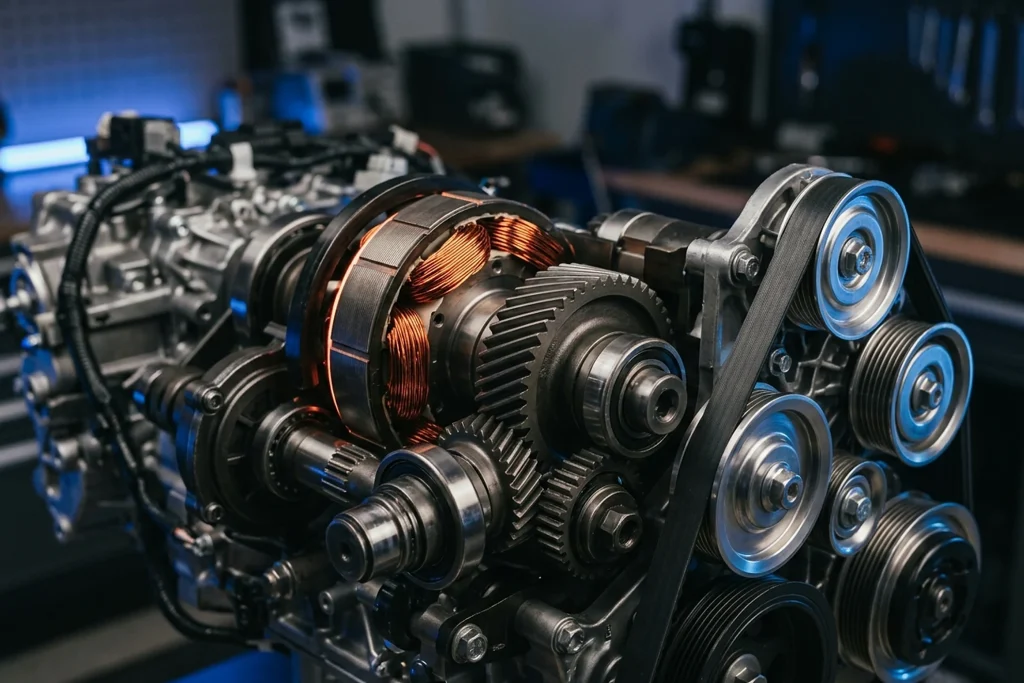
e-CVT, on the other hand, is most associated with Toyota and Lexus hybrids. Instead of pulleys and a belt, this system uses a power-split mechanism consisting of electric motors alongside the internal combustion engine, together with a planetary gear set. Thanks to this, the driver experiences an uninterrupted acceleration character. The control of the electric motors and the planetary gear arrangement play a role in this together. The electric motors do not only propel the vehicle. They also contribute to managing engine revs, generating electricity, and recovering energy through regenerative braking.
The fundamental difference is the mechanical structure. This difference also changes the maintenance requirements of the two systems and the potential failures that may be encountered.
Why it matters
These two abbreviations, which people researching cars with automatic transmissions see side by side in listings and technical specifications, can be mistaken for variants of the same system because of the similarity in their names; yet there is a mechanical distinction between them that can influence the purchase decision. This distinction matters most to drivers turning to hybrid vehicles, especially Toyota and Lexus models, because the system they will encounter in these brands is the e-CVT, and its driving character works differently from that of the conventional CVT. Since the structural difference also changes the maintenance requirements and the types of potential failures, the two systems cannot be lumped together for those who want to compare long-term ownership costs. On the other hand, because the extent of the maintenance difference is not detailed in the source text, the question of how much each system will cost its owner over the years remains open.